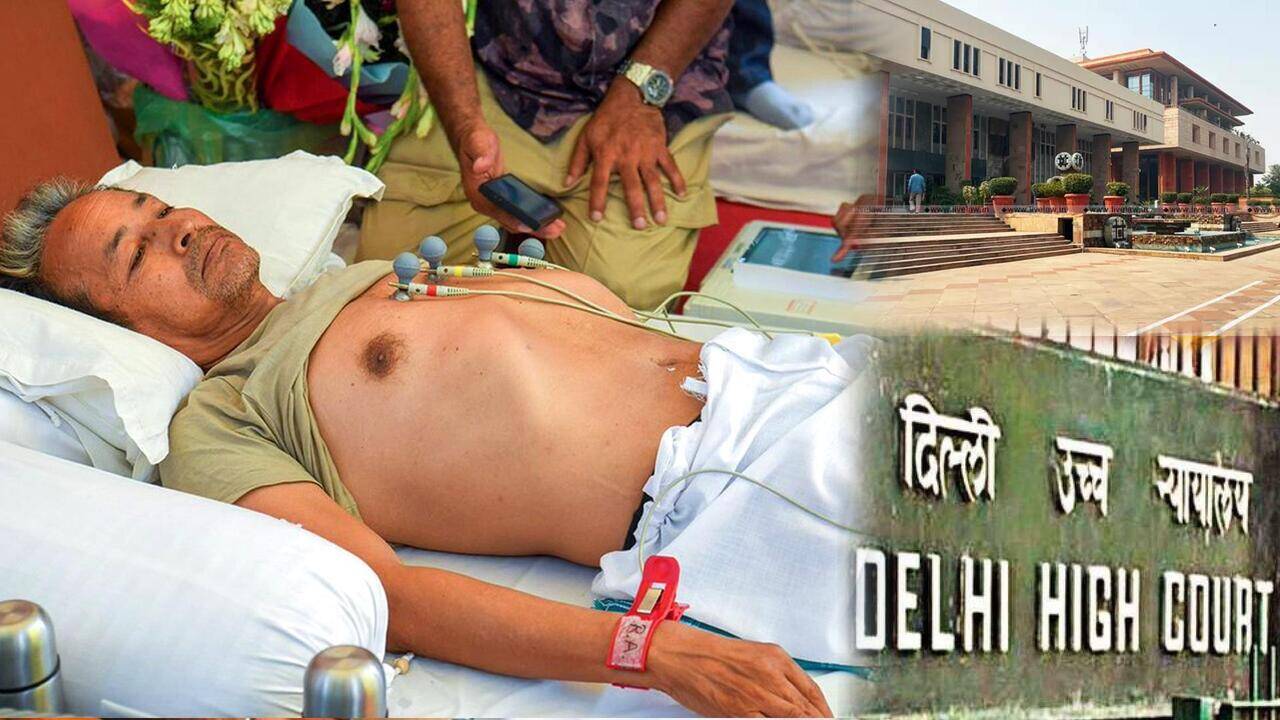
The Delhi High Court ordered the immediate transfer of activist Sonam Wangchuk from Safdarjung Hospital to Medanta Hospital, Gurugram, after concerns were raised about his safety and his constitutional rights. The order is relevant for UPSC because it links medical care, judicial intervention, and the protection of Articles 19 and 21 of the Constitution of India.
Safdarjung Hospital authorities said Wangchuk was discharged on Tuesday evening and moved to Medanta Hospital for further treatment in compliance with the Delhi High Court order. The court said the transfer was necessary for his safety and for protection of his fundamental rights.
The bench, led by Chief Justice D.K. Upadhyaya and Justice Tejas Kaaria, considered medical concerns after interaction with doctors from All India Institute of Medical Sciences (AIIMS) and Safdarjung Hospital. The court also said that, subject to medical protocol, Wangchuk's wife, Gitanjali J. Angmo, would be allowed to visit whenever she desired.
The medical transfer followed a 24-day hunger strike by Wangchuk in solidarity with the Cockroach Janta Party student protest. The hospital shift was carried out after the court's direction.
Why this matters for UPSC
The case is useful for revising the judiciary's role in enforcing constitutional rights in situations involving health, liberty, and bodily autonomy. It also provides an ethics lens on whether medical protocol, patient safety, and family access can be balanced through judicial supervision.
Related current affairs
- HC rejects plea to transfer Wangchuk from Safdarjung
- After HC direction on wife’s petition, Wangchuk shifted to Medanta Hospital
- Police move Wangchuk to hospital on Day 21 of fast
- Delhi HC seeks government’s reply on police action during protests
- Delhi HC seeks govt. response on police actions during CJP march
- Letters to the Editor