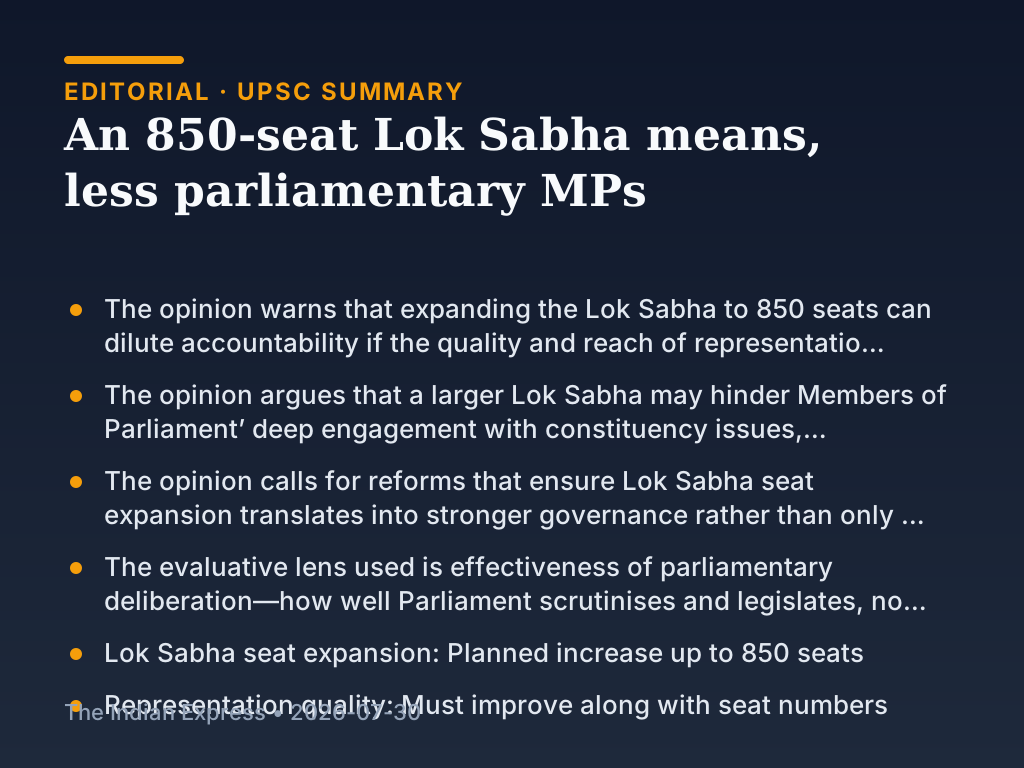
What happened: Lok Sabha expansion to 850 seats and the risk to effective representation
The Indian Express raises concerns about the implications of expanding the Lok Sabha to 850 seats. The central claim is that raising seat numbers without improving the quality and reach of representation can weaken accountability and reduce the meaningfulness of parliamentary work. The opinion links this risk to lower depth in Members of Parliament’ engagement with constituency issues, legislative scrutiny, and law-making.
The opinion highlights a practical governance concern: a larger House can stretch Members of Parliament’ time and attention. Reduced depth of engagement can weaken parliamentary scrutiny through debate and oversight practices and can also reduce the attention given to detailed examination of laws.
Background and earlier position: Parliament’s representative function depends on more than seat numbers
The opinion builds on a practical principle: representative government and accountability are not guaranteed by headcount alone. Effective parliamentary functioning requires Members of Parliament to balance three connected tasks—constituency work, parliamentary scrutiny, and law-making.
If an expanded House makes it harder for Members of Parliament to engage deeply across these tasks, governance can weaken even when Parliament becomes numerically larger.