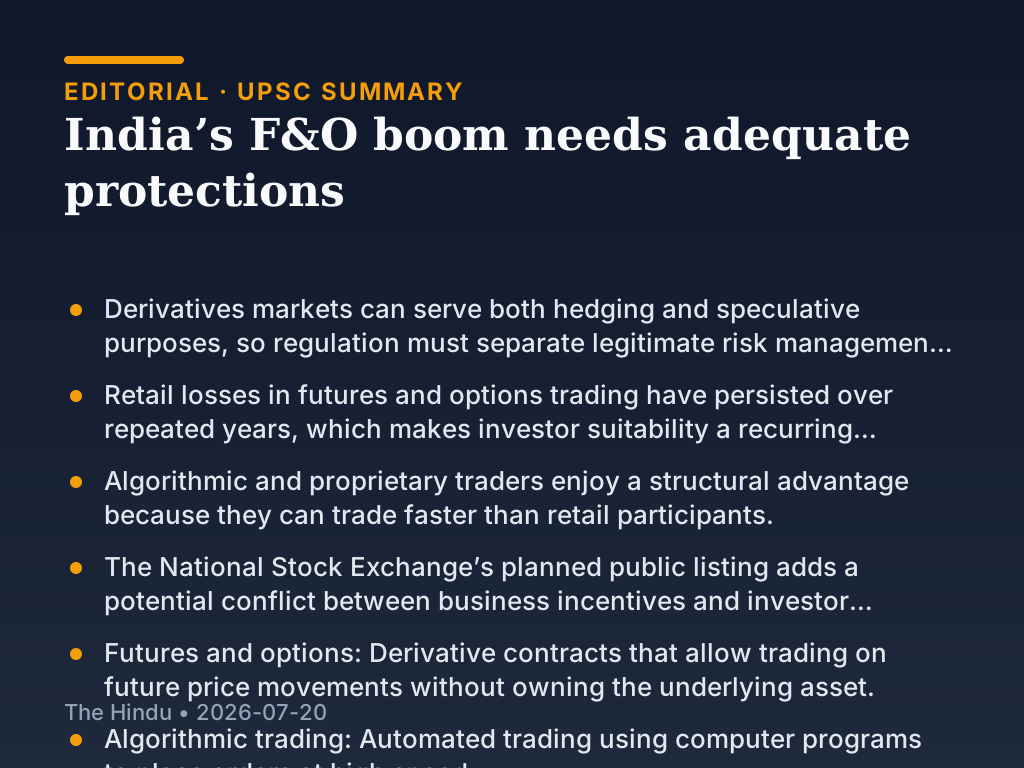
India’s futures and options boom and the investor-protection problem
India’s futures and options (F&O) market has become a major retail trading arena, but the market’s expansion has also raised serious investor-protection concerns. Retail traders often enter derivatives markets hoping for fast gains, while market structure, costs, and speed advantages allow sophisticated participants to capture most profits.
Derivatives let investors speculate on future prices without owning the underlying asset. That feature creates liquidity and hedging opportunities, but it also creates the possibility of large losses for traders who do not understand leverage, taxes, and transaction charges.
Why the retail advantage is weak
Transaction costs such as brokerage and exchange fees absorb a large part of retail losses. Retail strategies also often ignore taxes and per-trade charges, which makes the apparent gain from short-term speculation misleading.
Related current affairs
- Trust is key, tech funds need more guardrails
- Trust is key, tech fund needs more guardrails
- High-Level Panel Discussion at NCRBC 2026 on ESG, Governance and Board-Level Disclosures
- AMFI eases process for transfer of mutual fund nominees/brief notice
- Investor alerts/regulatory caution related to financial markets
- SBI sells 1.42% stake in SBIFM via pre-IPO placement for ₹1,655 crore