GS2The Indian Express · Editorial
3 protests, 3 retreats: What it says about Modi-led govt’s limits
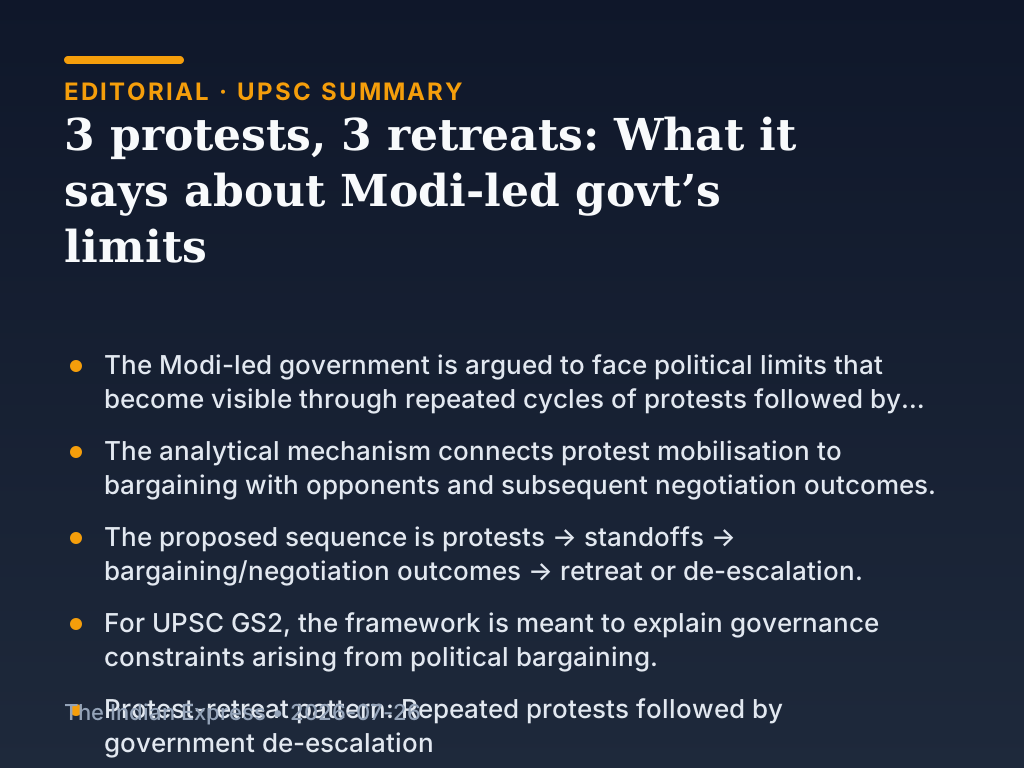
An analysis argues that the Modi-led government faced political limits visible through repeated cycles of protests and later retreats after bargaining with opponents.
SP
Samachar Pathshala Desk
Published 26 Jul 2026 · 1 min
Key takeaways
- Public protests can raise political costs for decision-makers, making negotiations more urgent.
- Repeated cycles of protest and de-escalation can signal shifting bargaining positions between political actors.
What happened (protest–retreat cycles as a bargaining pattern)
The Indian Express analysis describes a recurring conflict pattern involving the Modi-led government and political opponents: protests are followed by de-escalation, described as retreats. The central claim is that bargaining and negotiation after standoffs influence how far political actors can sustain confrontational positions.
Background and earlier position (how protests can act as bargaining inputs)
The UPSC angle
GS2
Protest–bargaining–retreat sequence as a governance constraint lens
UPSC can use the protest-to-negotiation sequence as a framework to explain policymaking constraints: street pressure changes bargaining incentives, which then shape negotiated de-escalation (retreat).