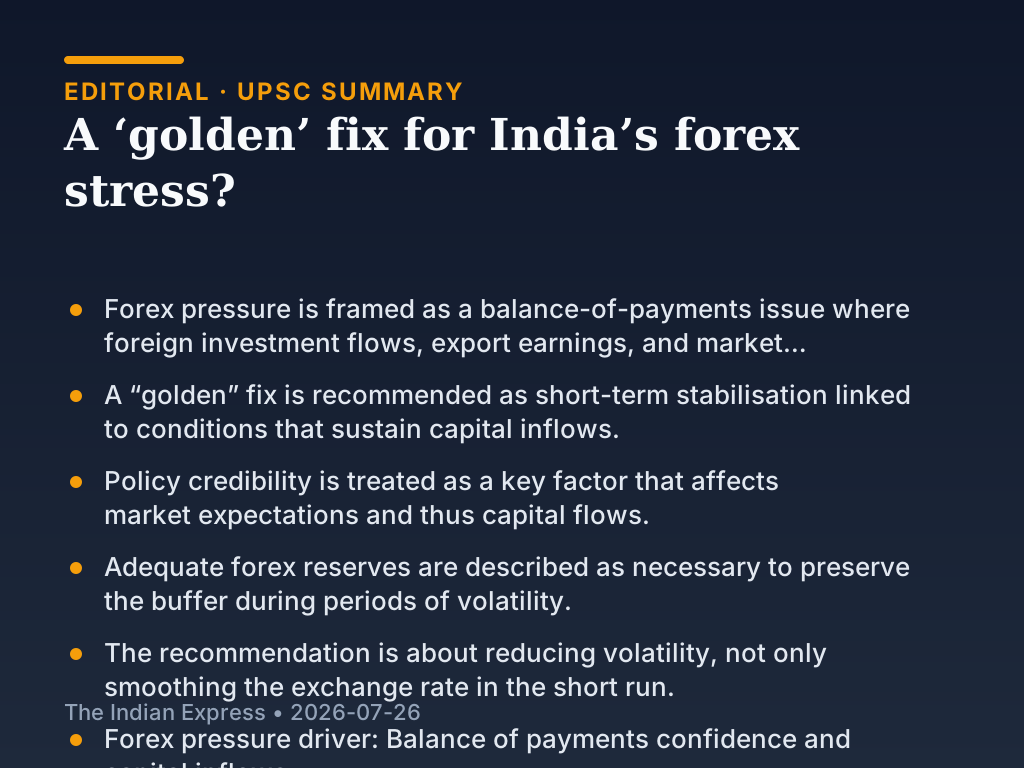
Forex stress management in India can be approached as a balance-of-payments problem rather than only a short-term currency stabilisation task. The argument links pressure on the rupee to foreign investment flows, export earnings, and market expectations, and it recommends pairing any immediate stabilising steps with conditions that sustain inflows, reduce volatility, and protect forex reserves.
What happened (core claim about the current forex situation)
The opinion frames India’s forex pressure as a balance-of-payments stress where foreign currency coming into the country and leaving the country does not match for a period. In that framing, the rupee’s stability depends on three linked channels:
Foreign investment flows that influence foreign currency supply.Export earnings that influence foreign currency inflow through trade.Market expectations (investor confidence in future stability and policy credibility).
Background and earlier position (how the system connects confidence, inflows, and reserves)
Forex pressure is not only about the day-to-day exchange rate. When expectations about risk change, capital can flow differently. The country then relies more on forex reserves—the buffer stock of foreign currency—to absorb shocks while the underlying imbalance is corrected.
Related current affairs
- INBRIEF: India’s forex reserves jumped by $10.512 billion to $692.866 billion
- MALHOTRA FLAGS RISING ENERGY PRICES & TRADE POLICY UNCERTAINTIES AS UPSIDE RISKS TO CURRENT ACCOUNT DEFICIT
- RBI says $40.82 bn mobilised via concessional swap facility till July 31
- The rupee’s journey: From overvalued to undervalued
- Pakistan seeks $10 billion in US forex stabilisation aid to boost economy
- Strengthening the India–New Zealand partnership (letter)