GS2The Indian Express · Editorial
Protest Ground Zero
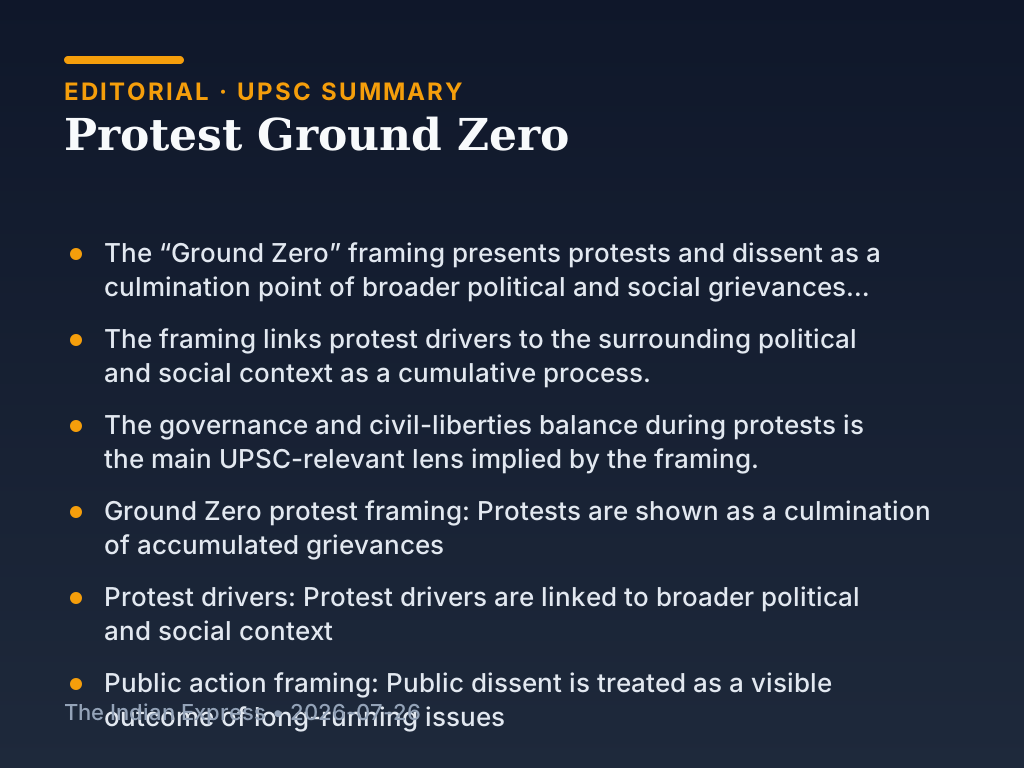
A protest framed with “Ground Zero” language is interpreted as a culmination of broader political and social grievances, with implications for public order and civil liberties.
SP
Samachar Pathshala Desk
Published 26 Jul 2026 · 1 min
Key takeaways
- “Ground Zero” means a flashpoint moment where accumulated grievances become visible through public protest.
- Freedom of speech and assembly under Article 19(1)(a) and Article 19(1)(b) allow limited restrictions under Article 19(2) and Article 19(3) for public order and related grounds.
- During protests, the State should aim to prevent violence and protect life and property using lawful, proportionate steps, not blanket suppression.
What happened (how “Ground Zero” is used for protest and dissent)
The framing interprets protest and dissent as a focal “Ground Zero” moment where political and social tensions that build over time become clearly visible in public action. The protest is presented as a culmination of pressures rather than as an isolated episode.
Background and earlier position (drivers of protest are treated as cumulative)
The UPSC angle
GS2GS4
Protests as a governance stress-test: dissent rights vs public order duties
UPSC can frame the issue around the State’s obligation to protect lawful dissent as democratic participation while still preventing violence and maintaining public order using lawful and proportionate measures.