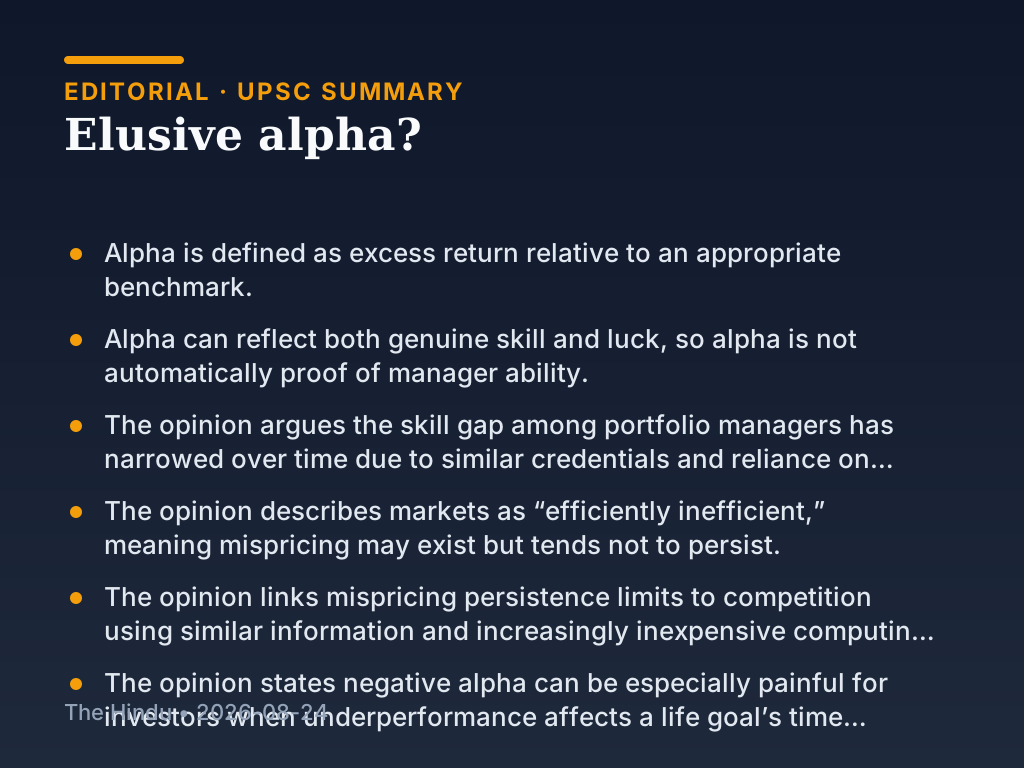
What the opinion argues
A finance opinion in The Hindu focuses on why active mutual funds often struggle to repeatedly beat their benchmarks. It treats “alpha” as a measurable excess return and then links poor repeatability of outperformance to two forces: uncertainty about how much outperformance is truly due to skill versus luck, and market competition that tends to remove mispricing.
Alpha: what it means in plain terms
The opinion defines alpha as returns earned in excess of a suitable benchmark. Alpha is not a label for “good investing skill only”. It can reflect both: (1) genuine portfolio manager skill in selecting and timing assets, and (2) luck—random factors that affect returns for a period.
Why luck can be a large part of observed alpha
The opinion argues that the “skill gap” among portfolio managers may have narrowed over time. It gives two reasons: credentials among managers have become more similar, and investors can act using only publicly available information. With skill differences becoming harder to detect and with common information sets, observed gaps between the worst and best funds may not be fully explained by skill alone.