What happened
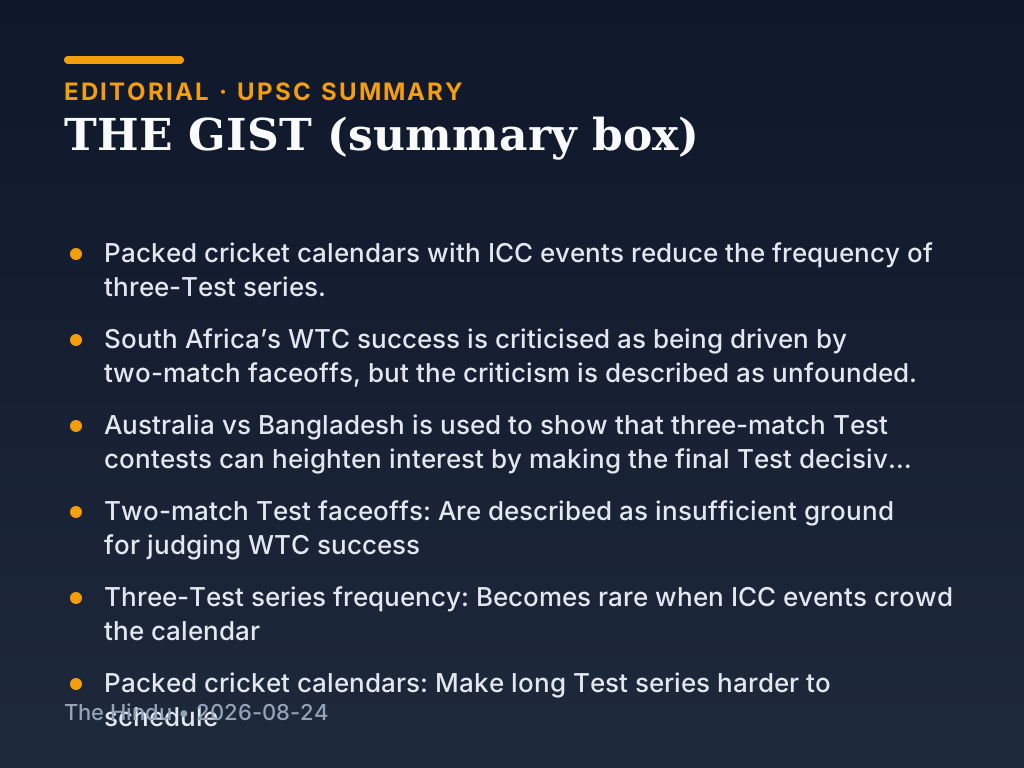
The discussion focuses on how international cricket scheduling and series formats affect perceptions of performance and public interest. It argues against a view that South Africa’s strong results in the World Test Championship (WTC) can be fairly criticised just because South Africa sometimes used two-Test faceoffs. It further argues that packed cricket calendars with International Cricket Council (ICC) events make three-Test series rare. Finally, it explains the Australia vs Bangladesh example to show how three-match Test contests can keep attention high by giving a decisive last Test after an early setback.
Background and earlier position
Cricket’s international calendar includes frequent ICC events and tours involving multiple formats. Because of this overall calendar density, longer Test series (for example, three-Test contests) are harder to fit in consistently. Within this constraint, teams may play shorter Test series such as two-Test faceoffs, especially when scheduling windows are tight.
What changed now
The main change in the argument is interpretive rather than institutional: the discussion reframes “WTC success” criticism by rejecting the idea that using two-match faceoffs alone proves weak performance or unfair advantage. It also links the rarity of three-Test series directly to calendar crowding, rather than treating series length as a controllable lever that teams can freely use. The Australia vs Bangladesh example then provides a format-based explanation: when three Tests are played, the series outcome can remain open until the final Test, which can heighten engagement even if one team loses early matches.