What happened: U.S. Senate tariff threat framed as “weaponisation”
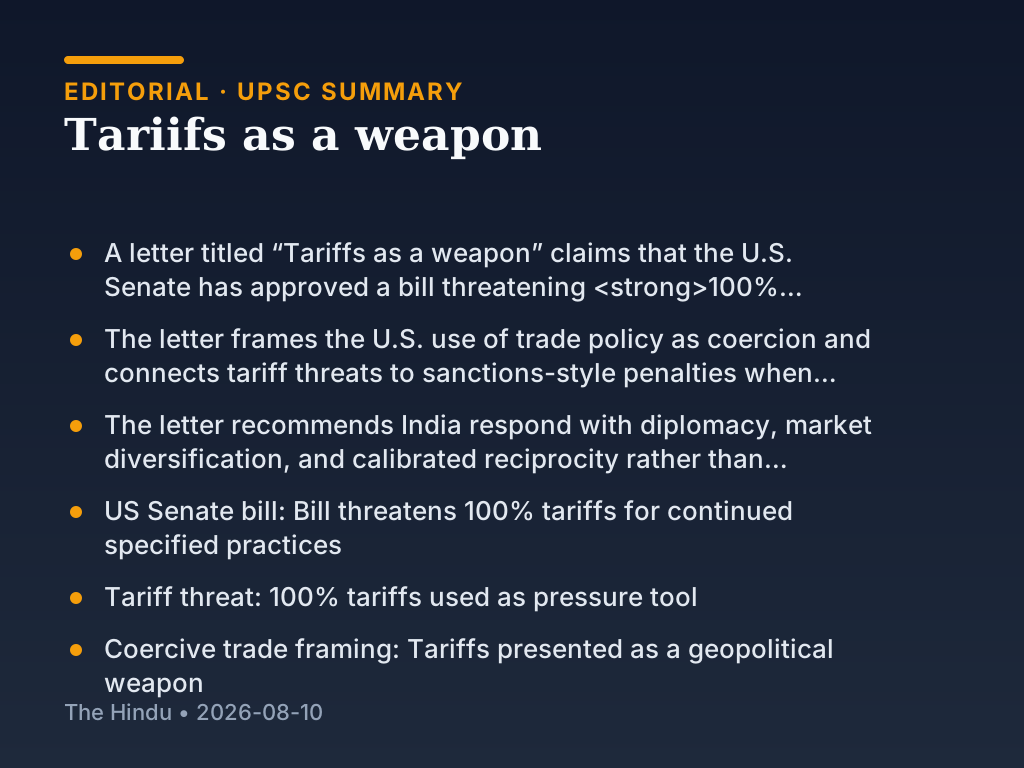
A letter titled “Tariffs as a weapon” claims that the U.S. Senate has approved a bill threatening 100% tariffs against countries that continue specified practices. The writer presents the U.S. use of trade policy as coercion—raising economic costs for non-compliance—and warns that tariff threats can produce sanctions-style penalties when affected countries cannot quickly substitute supplies or change economic behaviour.
Background and earlier position: why extreme tariffs can resemble sanctions pressure
The letter’s underlying logic treats very high tariffs as a hard disincentive, similar to sanctions pressure. When import costs rise sharply, market access becomes expensive and unstable. Adjustment is feasible only if a country can rapidly switch suppliers and substitute inputs, which is often slow in energy markets.
What changed now: the bill’s 100% threshold increases escalation risk
The letter highlights the 100% tariffs threshold as the change that escalates stakes. A very high tariff threat increases the probability of a sudden trade shock and raises geopolitical costs for countries that want to continue the targeted practices but cannot absorb the disruption.