What happened
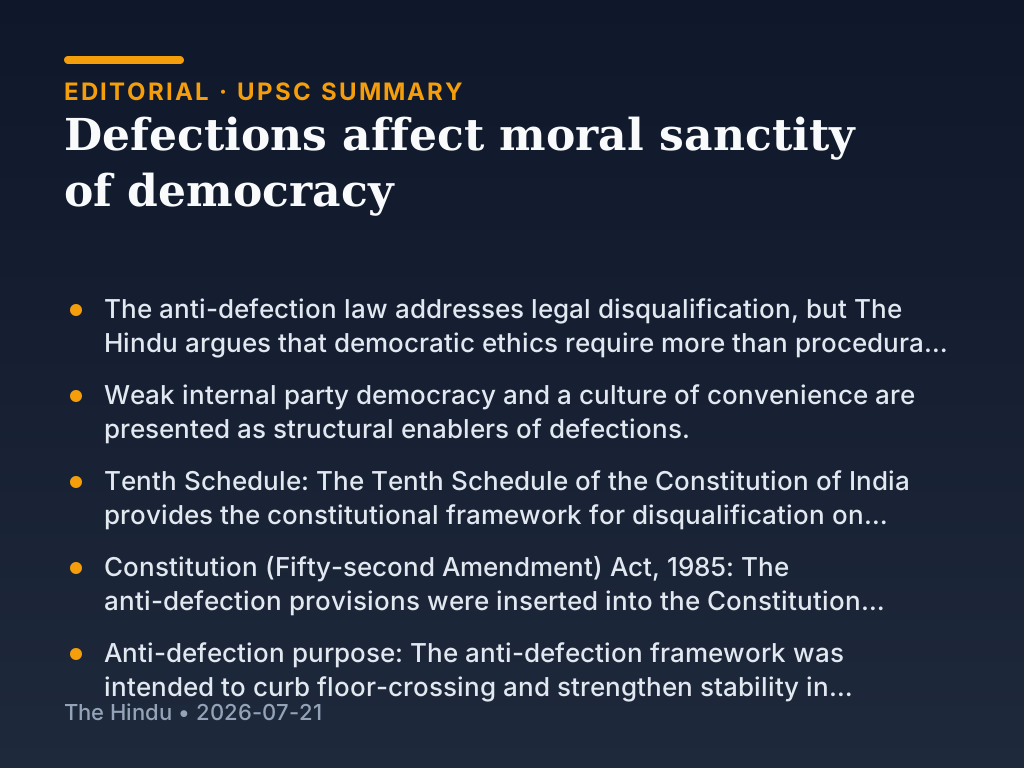
The Hindu column argues that party defections have moved beyond isolated claims of conscience and now reflect a deeper democratic problem. Political switching for power, convenience, or access to office weakens trust in representative institutions and distorts the mandate given by voters.
The anti-defection regime has not fully addressed the ethical damage caused by political betrayal. Legal restrictions can discourage opportunism, but the larger challenge is the normalisation of defection as acceptable political conduct.
Background and earlier position
India already has a constitutional framework to discourage defection through the Tenth Schedule, inserted by the Constitution (Fifty-second Amendment) Act, 1985. The anti-defection law was intended to curb floor-crossing and provide stability in elected bodies.
The present debate sits in the context of weak internal party democracy, a culture of convenience, and the pursuit of immediate political advantage. These conditions make defections easier to justify and harder to treat as exceptional.
Related current affairs
- SC seeks Centre’s reply on Sibal plea over Tenth Schedule interpretation
- Will have to see if there was split in Shiv Sena: SC
- TMC supporter now with BJP: Meet Tula Mondal; promises and campaign materials
- SC seeks Centre’s reply on plea over anti-defection law ‘merger’ exception
- SC to hear Goa Congress leader’s petition against defection of MLAs to BJP
- SC to hear Goa Cong. leader’s plea against defection