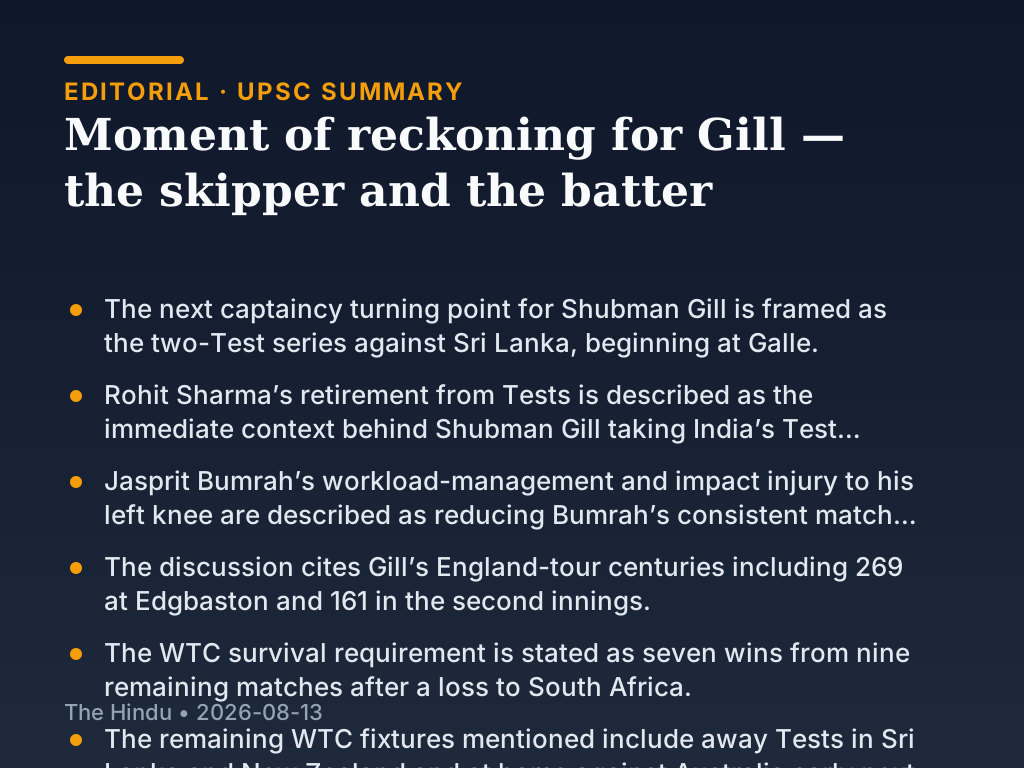
What happened: Gill’s captaincy pressure shifts to Sri Lanka at Galle
The discussion of Shubman Gill’s captaincy treats the upcoming two-Test series against Sri Lanka at Galle as the next turning point. The main idea is that Galle’s match conditions and early-turning pitch behaviour increase the difficulty of both batting execution and on-field decision-making for India’s captain.
Background and earlier position: Gill becomes captain after Rohit Sharma’s Test retirement
Shubman Gill is described as becoming India’s Test captain after Rohit Sharma retired from Tests. The selection context also highlights Jasprit Bumrah having limited availability because of workload-management and an impact injury to his left knee. Under Ajit Agarkar, selectors are described as choosing Gill as a long-term leader even though Gill’s First-Class captaincy experience is said to be limited.
What changed now: Sri Lanka at Galle is framed as a different challenge
The upcoming Sri Lanka series at Galle is framed as a pressure test because Sri Lanka conditions—especially at Galle—are described as tending to turn early. Early turn increases the cost of small mistakes, so India’s captain is expected to lead through adaptation in batting strategy and in India’s spin options and overall match execution.