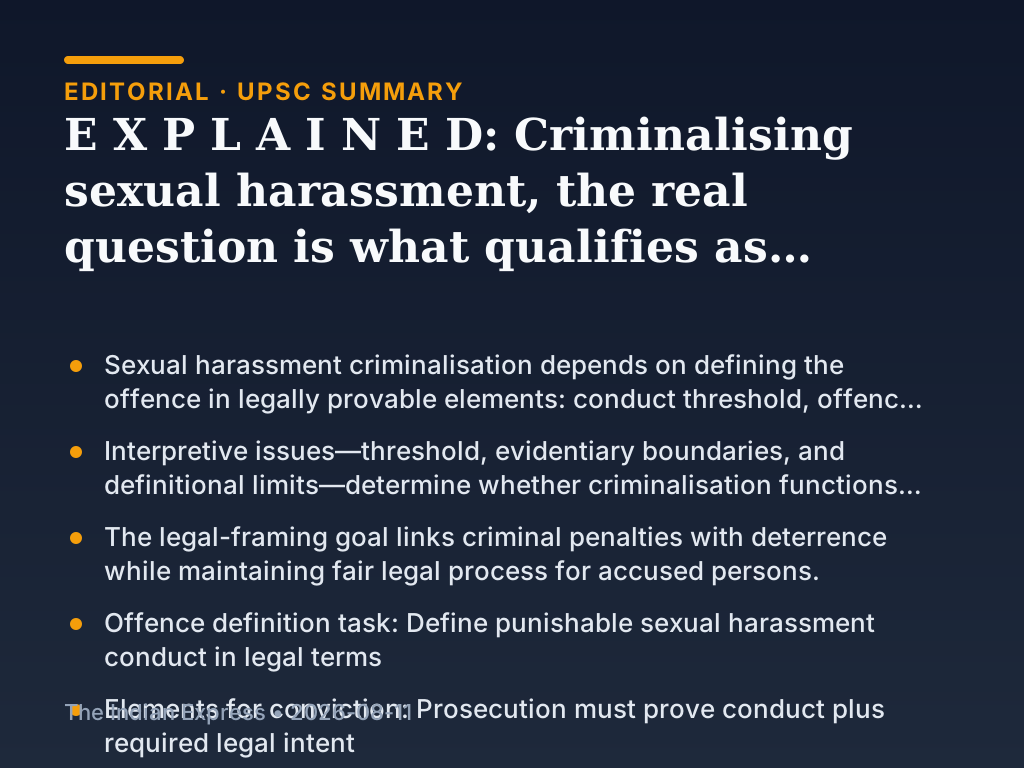
What happened: criminal law on sexual harassment depends on offence-definition and evidentiary boundaries
Sexual harassment criminalisation is not only about adding punishment. The core legal work is to define an offence in clear, provable elements—what conduct counts, what mental element (intent/knowledge) is required, and what level of proof courts should apply. A legal explainer highlights that interpretive questions (threshold, evidentiary boundaries, and definitional limits) determine whether the law operates as a reliable deterrent and a protection mechanism for victims, rather than becoming either too vague or too narrow.
Background and earlier legal position: shifting from “protection/discipline” to “criminal offence”
Before criminal-law approaches become central, sexual harassment regulation in India has typically relied on prevention, workplace obligations, and disciplinary processes under existing laws and rules. Criminalisation adds a different layer: it makes selected forms of sexual harassment punishable as a criminal offence, which in turn requires sharper definitions and procedural fairness because criminal conviction carries higher stigma and stricter standards of proof.
What changed now: strengthening the criminal-law approach through clearer offence framing
The explainer focuses on how legislation aims to criminalise sexual harassment by clarifying the legal framing. It highlights the following design questions that legislation and courts must answer when interpreting the offence: Conduct threshold: which behaviours cross the legal line into “harassment” for the criminal offence.Offence definition: how the offence is defined in legal terms, so decision-makers apply the same test in similar cases.Intent/mental element: what level of intent, knowledge, or purpose must be shown (depending on how the law words the offence).Evidentiary and definitional boundaries: what kinds of facts count as proof, and what limits prevent overreach.Policy goal: using criminalisation for deterrence and victim protection while maintaining fair process for accused persons. The key emphasis is interpretive: the law’s deterrence effect depends on predictable standards for proving the offence, not only on the presence of a criminal sanction.
Related current affairs
- RS passes Bill criminalising insult to Vande Mataram
- Other right-column brief: Hyderabad complaint/assault update (sexual harassment/incident)
- DMK MLA arrested for remarks against Tamil Nadu CM
- 2020 riots larger conspiracy case: apex court stays HC order granting Kalita access to probe documents
- Maritime Anti-Piracy Act case against Somali pirates,
- Karnataka temple 'rape' case: owner seeks to quash chargesheet