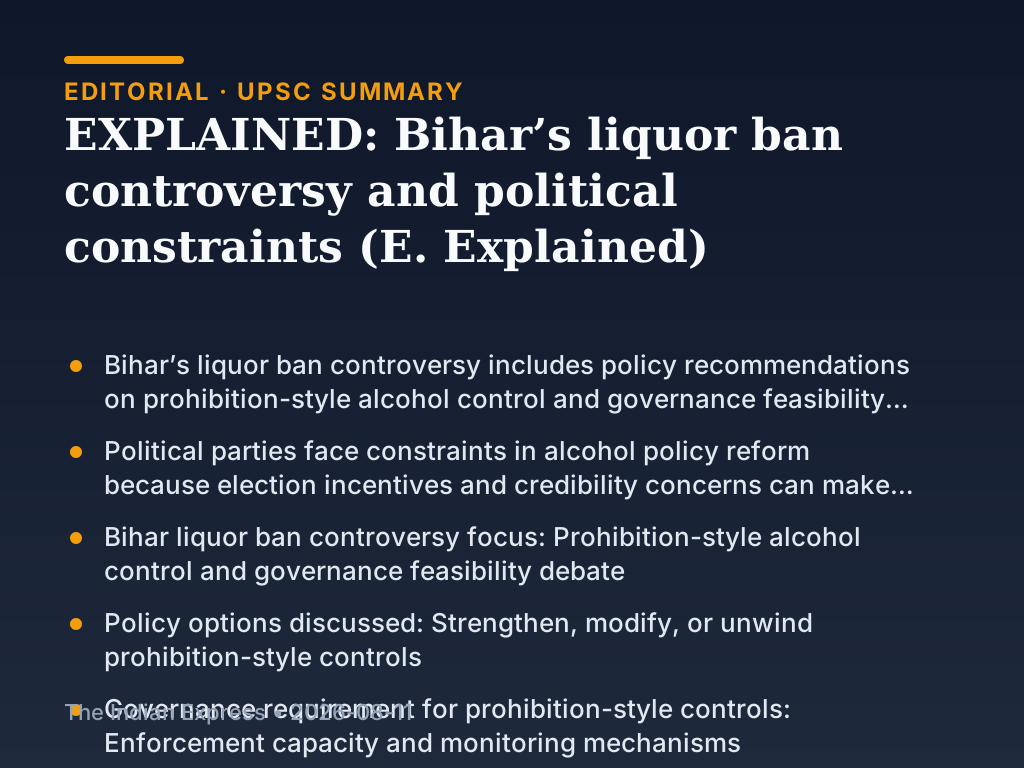
What happened: Bihar’s liquor ban controversy as a policy and political conflict
Bihar’s liquor ban controversy concerns how the state should regulate alcohol and whether a prohibition-style approach can be made workable. The dispute goes beyond slogans and also discusses recommendations for reform and questions about the Bihar government’s administrative steps for making the policy effective. Political arguments remain present because election incentives and credibility concerns can affect how quickly parties sustain or adjust prohibition promises.
Background and earlier position: alcohol control as a state governance task
Alcohol regulation in India is primarily handled by state governments through excise administration and state-level policy instruments such as restriction or prohibition. Within this framework, states can choose different policy routes to target similar goals like reducing harmful alcohol use and its social costs. Different designs create different enforcement and compliance challenges.
What changed now: the debate shifts toward feasibility and required administrative steps
The controversy emphasises feasibility, meaning the administrative work Bihar must do to change its liquor ban approach. Alcohol policy change requires enforcement mechanisms, monitoring arrangements, and rule-level adjustments so that alcohol regulation does not simply displace activity into less visible channels. Political continuity also becomes part of feasibility, because policy reversal can carry political costs.
Related current affairs
- Report recommends ending Bihar’s liquor ban; why BJP will find it hard
- E. EXPLAINED: Liquor ban in context of governance and public policy
- E. Explained: Bureaucracy and explanation—what the 'E.' label indicates (container for information panel)
- EXPLAINED: The JDU’s request to consider liquor ban—how it connects to constituencies and lawmaking