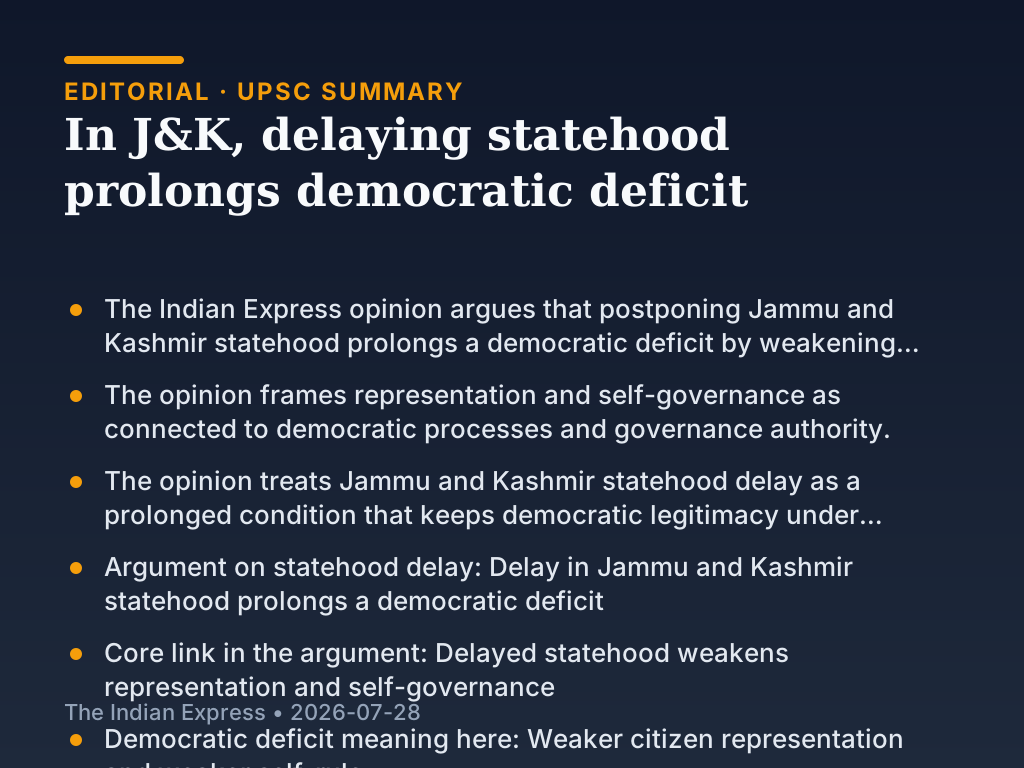
What happened: an opinion links Jammu and Kashmir statehood delay to a democratic deficit
A The Indian Express opinion argues that postponing Jammu and Kashmir statehood prolongs a democratic deficit. The opinion connects the delay with weaker representation and weaker self-governance, presenting “statehood delay” as a continuing effect rather than a temporary pause.
Background and earlier position: the democratic deficit framing
The democratic deficit argument in the Jammu and Kashmir context is framed around citizens’ democratic participation through representative institutions. In this framing, representation means citizens can meaningfully influence policy through representatives, and self-governance means decision-making is located with elected bodies rather than being dominated by non-elected control.
What changed now: the argument treats statehood delay as a prolonged condition
The opinion does not treat Jammu and Kashmir statehood delay as a short administrative interval. The opinion’s central claim is that postponement continues to keep representation and self-governance weaker than they would be under full elected statehood arrangements, thereby keeping democratic legitimacy under pressure for a longer period.