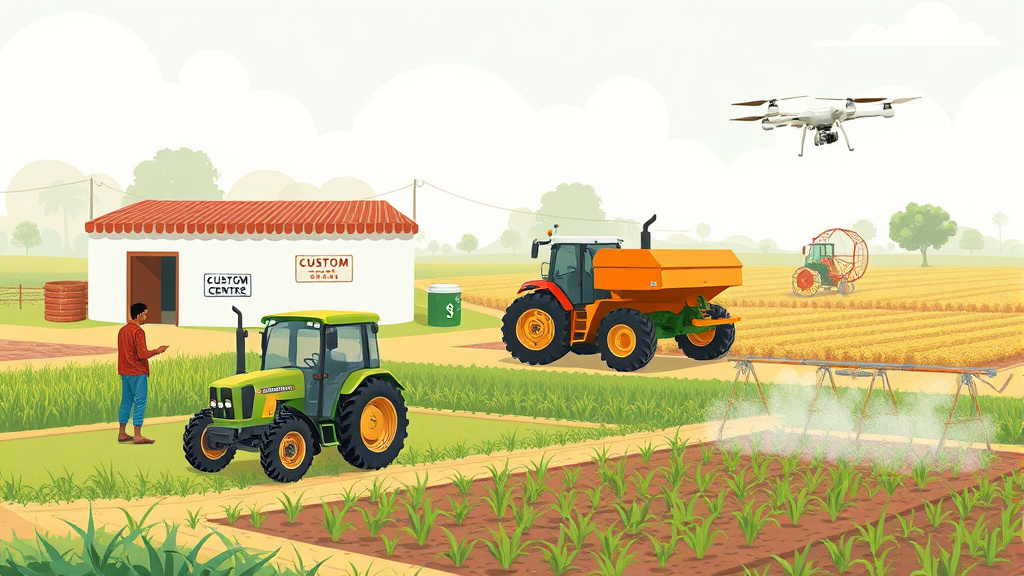
The Sub-Mission on Agricultural Mechanization (SMAM) is a key instrument for widening access to farm machinery in India. The latest update shows that the scheme is being used not only to subsidise equipment, but also to expand custom hiring, support women and disadvantaged groups, and push drone-based precision agriculture.
For UPSC, the issue matters because mechanisation sits at the intersection of agricultural productivity, rural labour use, technology diffusion, and inclusive welfare delivery. It also illustrates how a Centrally Sponsored Scheme works through Centre-State cooperation.
What SMAM is
SMAM was launched in 2014–15 under the Rashtriya Krishi Vikas Yojana (RKVY). The stated aim is to “reach the unreached” by extending mechanisation support to small and marginal farmers, women, Scheduled Castes (SC), Scheduled Tribes (ST), Farmer-Producer Organizations (FPOs), Self-Help Groups (SHGs), and rural entrepreneurs.
The scheme covers the full farm cycle: land preparation, sowing, irrigation, plant protection, harvesting, and post-harvest management. The policy logic is simple: reduce dependence on manual labour and animal power, improve timeliness, and lower operational costs.
What the latest update says
Related current affairs
- Union Agriculture Minister calls farmers backbone; highlights integrated and natural farming at Krishi Jan Kalyan Samvad in Patna
- ICAR’s 97th AGM outlines roadmap for farmer-centric, resilient and self-reliant agriculture
- Agriculture Minister launches monthly scholarship payments for agriculture students via NSP-DBT
- Government response on agricultural yield losses due to human-induced land degradation
- Union Minister directs measures to strengthen Totapuri mango value chain and stabilise prices for farmers
- ICAR studies natural farming under All India Network Programme; findings on yields, soil health and incentives under Mission