What happened (government summary of mission outcomes)
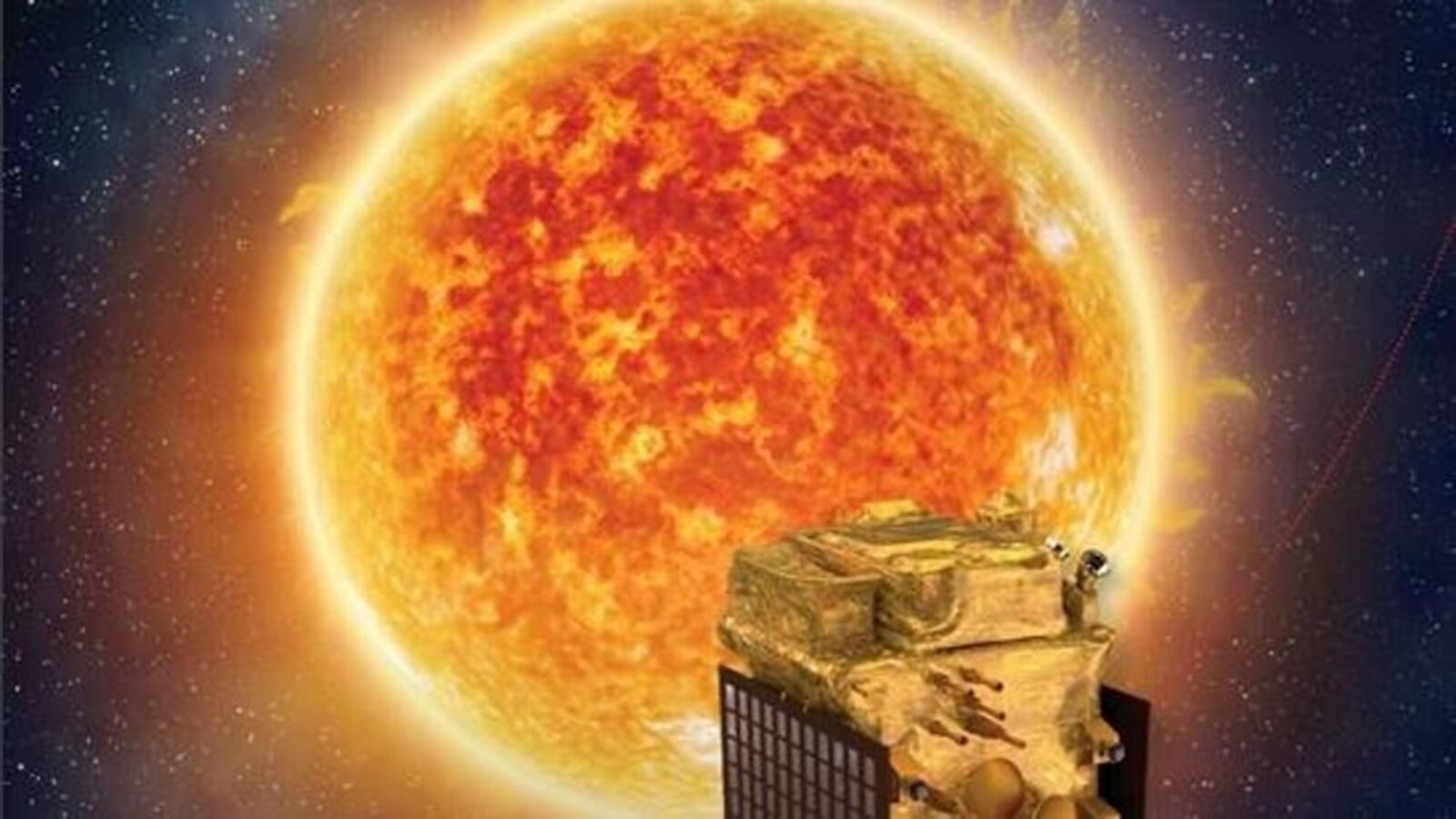
In a Rajya Sabha written reply, the Department of Space highlighted scientific outcomes from two flagship Indian missions: Aditya-L1 for solar physics at the Sun–Earth L1 point and Chandrayaan-3 for lunar science near the Moon’s south pole. Aditya-L1 achievements covered solar eruptive events (flares and coronal mass ejections) through spectroscopy and near-ultraviolet imaging/spectroscopy, while Chandrayaan-3 outcomes included in-situ thermal profiling, regolith structural interpretation, elemental composition measurements, near-surface plasma characterisation, and lunar seismic event detection.
Aditya-L1: scientific objectives and major results
Aditya-L1’s stated scientific objectives include studying solar wind particles, the solar corona, near-ultraviolet signatures on the solar disc, and solar magnetic fields—specifically the Interplanetary Magnetic Field (IMF). The satellite’s location near the Sun–Earth L1 point is described as enabling a continuous view of the Sun, functioning as a dedicated solar physics observatory. Major results cited in the reply include CME-onset spectroscopic signatures, combined ground-and-mission insights during intense geomagnetic storms, and flare-focused analyses during Solar Cycle 25.
CME onset and geomagnetic storm-linked insights
Aditya-L1 is credited with capturing first-ever spectroscopic signatures of the onset phase of a Coronal Mass Ejection (CME). The reply also notes that scientists combined global ground measurements with Aditya-L1’s direct particles and fields observations to derive insights tied to observations during intense geomagnetic storms in May and October 2024.
Related current affairs
- Chances on life on Mars (Fifty Years Ago August 27, 1976)
- Total solar eclipse: The best time to study Sun’s ‘invisible’ part
- ISRO and Japanese scientists review Chandrayaan-1 mission
- FROM THE ARCHIVES: ‘Roman letter’ on Mars rock
- Thermal signatures of three decades of solar storms reveal new clues for space weather forecasting
- Magnetic Trees help researchers unearth hidden flow in the Sun’s upper atmosphere