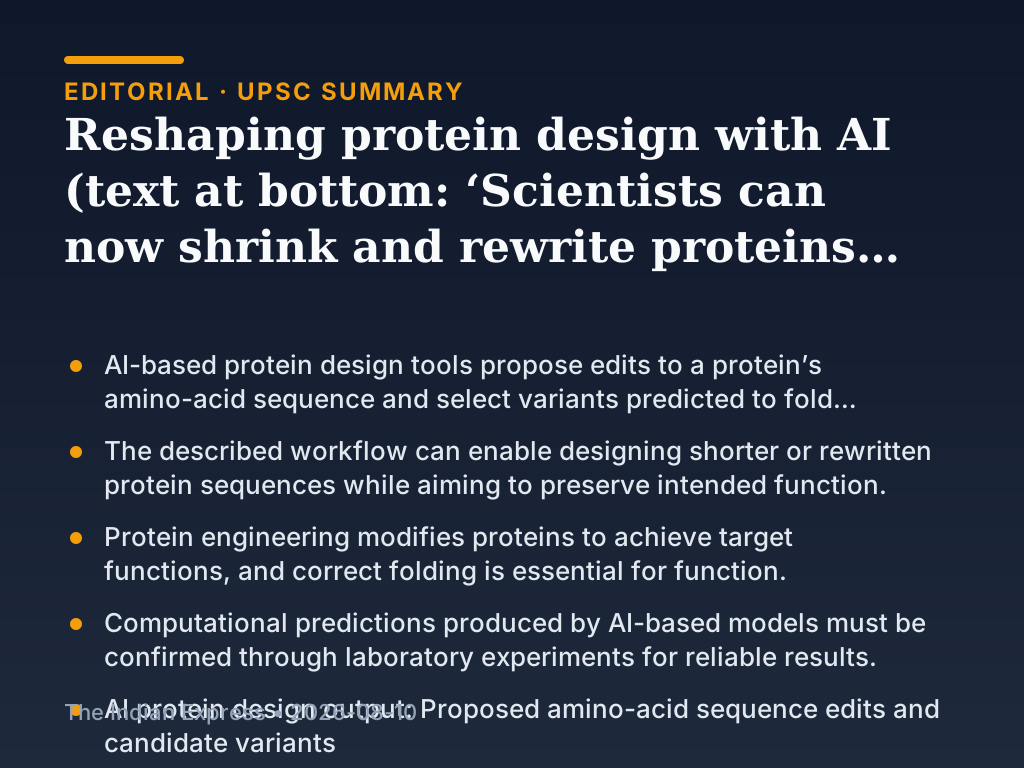
What happened: AI proposes and selects rewritten protein sequences
A science explainer describes an AI-based protein redesign workflow where machine learning tools first propose edits to a protein’s amino-acid sequence and then select variants predicted to fold correctly and behave as intended. The workflow can enable researchers to work with shorter or rewritten protein sequences while aiming to preserve the desired protein function.
Background and earlier position: protein engineering relied more on lab iteration
Protein engineering modifies proteins to produce a target effect, such as changing binding or biological activity. Without AI-assisted design workflows, researchers mainly relied on laboratory experiments and iterative screening to identify which sequence variants fold properly and perform the desired function. Because protein folding and function depend on complex molecular interactions, many variants may need experimental testing.
What changed now: a propose-and-select workflow driven by machine learning
The explained workflow uses machine learning in two stages. In the proposal stage, the model suggests sequence edits. In the selection stage, the workflow filters suggested variants to keep candidates likely to fold correctly and show the target behavior.
Related current affairs
- Explained (AI/biotech): Scientists can now shrink and rewrite proteins with AI. Here’s what that unlocks
- NITI Aayog launches roadmap to build India as a leading bioeconomy powerhouse by 2035
- Jitin Prasada holds bilateral meetings in Morocco on trade, investment and digital transformation
- What changes when AI moves from reading viral genomes to designing them?
- Google’s AI advantage faces its biggest test yet
- AI speech recognition model trained on 65 Indian languages and dialects released