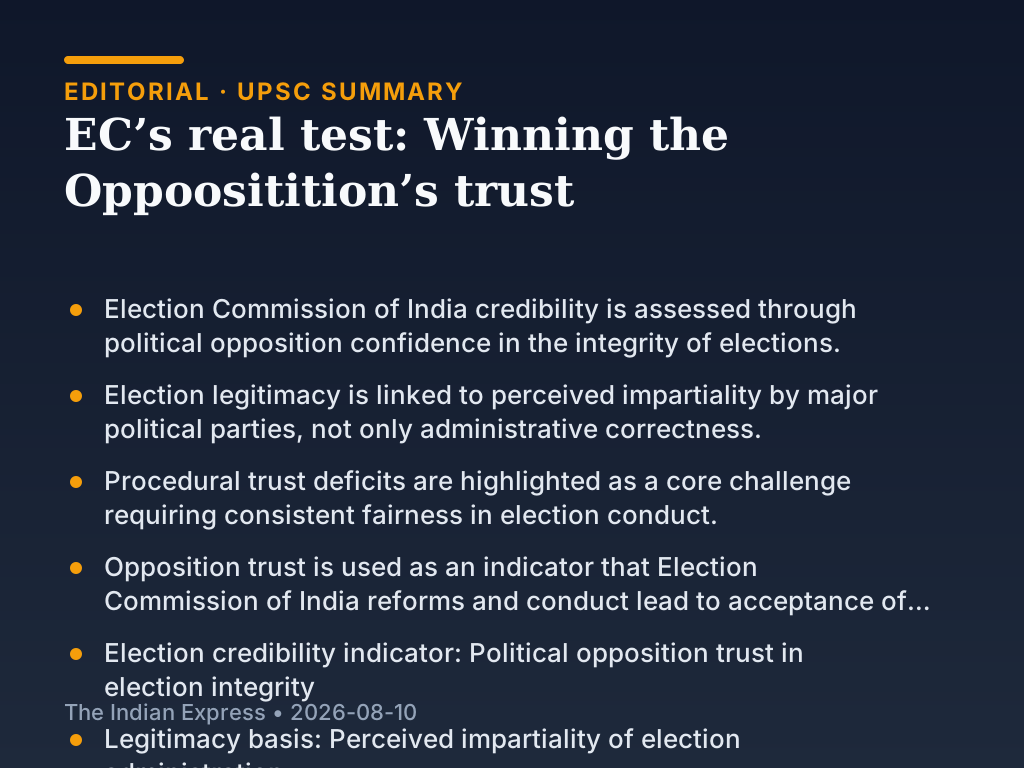
What happened: credibility of the Election Commission of India depends on opposition confidence
Election Commission of India credibility is described as depending on whether the political opposition believes that the electoral process is conducted with integrity. The acceptance of election outcomes by major parties is treated as a key outcome of election legitimacy.
Background and earlier position: election legitimacy needs both correct procedures and perceived impartiality
Electoral legitimacy has two related dimensions. One dimension is procedural correctness, meaning election authorities follow election procedures. The second dimension is perceived impartiality, meaning political competitors see the process as unbiased. The focus here is on the second dimension, where opposition confidence signals whether perceived impartiality is present.
What changed now: procedural trust deficits are treated as the core challenge for Election Commission of India
Election Commission of India reforms and election conduct are framed around procedural trust deficits. Procedural trust deficits refer to situations where political parties doubt that election procedures will be applied fairly and consistently. Election Commission of India is expected to address these deficits through consistently fair conduct over time, so that political opposition confidence improves.
Related current affairs
- The Editorial Page: Election Commission’s real test—winning the confidence of the Opposition (continued from page header)
- EC’s real test: Winning the opposition
- EC’s real test: Winning the vote of the people
- EC’s real test: Winning the Olympics’ oppossition (sic)
- Phase-3: Over 84,000 deleted for 'other' reasons in two states, one UT
- Invisible actors