What happened: Election Commission of India’s “real test” is public credibility
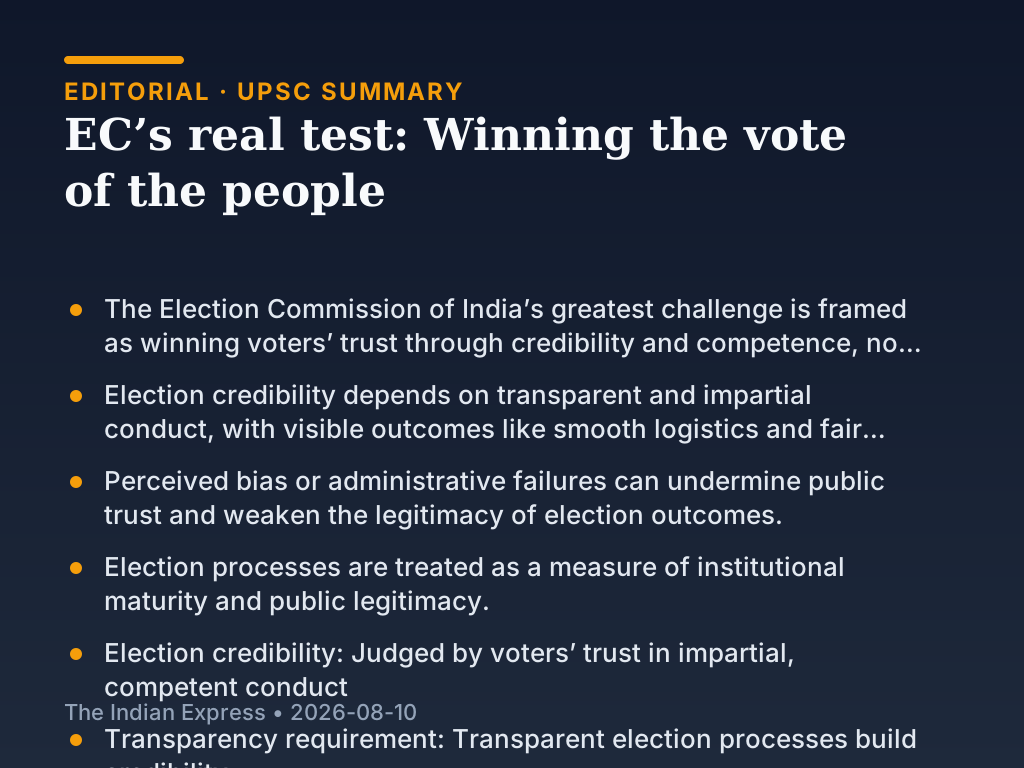
The Election Commission of India faces a central challenge that goes beyond conducting elections. The core test is earning voters’ trust in the Commission’s credibility and competence through election administration that voters can view as transparent and impartial. The opinion emphasises that any perceived bias or administrative failures can undermine public trust and weaken the legitimacy of election outcomes.
Background and earlier position: How election performance is judged
Election administration is judged through visible outcomes that shape the voter experience and stakeholder confidence. The opinion points to three broad indicators of election credibility: smooth election logistics, fair enforcement of election rules, and citizens’ confidence that the same standards apply to all sides. In this framing, institutional legitimacy depends on consistent rule application and reliable administration, not only on completion of the formal election schedule.
What changed now: Elections framed as an institutional maturity test
The coming electoral process is presented as a measure of institutional maturity and public legitimacy. This framing shifts attention from election-day formalities to a wider question: does the Election Commission appear capable, neutral, and transparent in ways that voters can judge and accept?
Related current affairs
- EC’s real test: Winning the opposition
- The Editorial Page: Election Commission’s real test—winning the confidence of the Opposition (continued from page header)
- EC’s real test: Winning the Oppoositition’s trust
- EC’s real test: Winning the Olympics’ oppossition (sic)
- Ex-chief of election commission: The CEC must protect voters’ choice, not politics
- Deletions in recent SIRs suggest arbitrary application of reasons (Telangana and Karnataka draft electoral rolls)