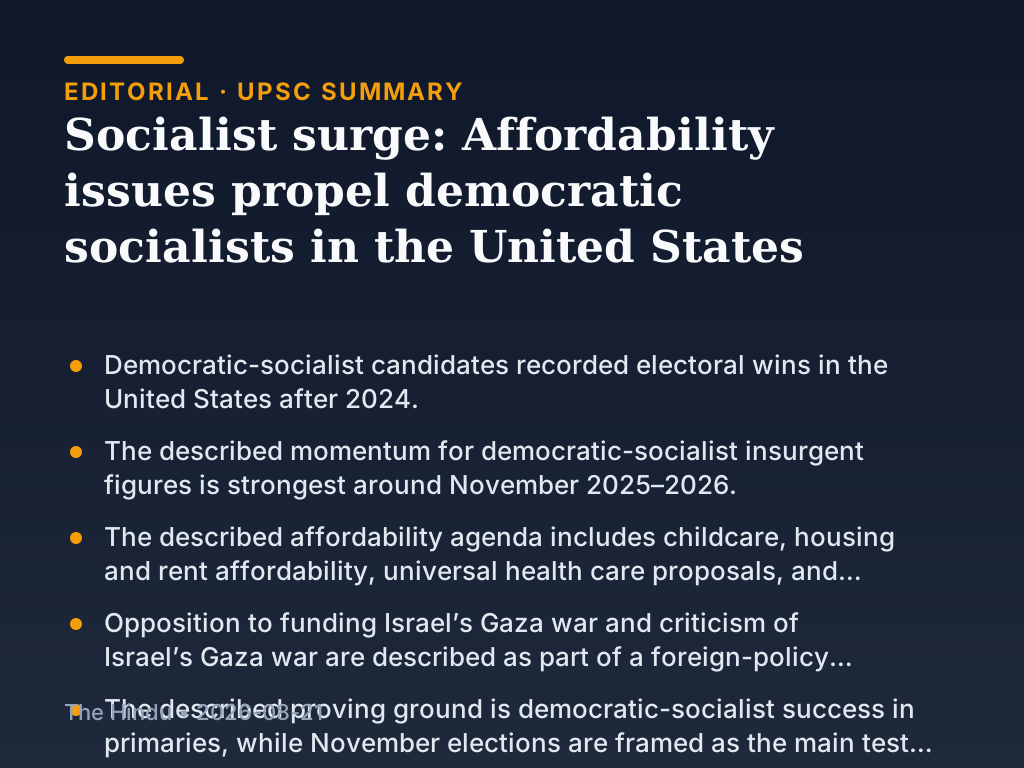
What happened: democratic-socialist electoral momentum in the United States (after 2024, peaking around Nov 2025–2026)
Democratic-socialist candidates in the United States recorded electoral wins after 2024. The described momentum is strongest around the period of November 2025–2026. The political narrative connects these wins to an affordability agenda and to a foreign-policy position that challenges parts of the mainstream Democratic Party’s foreign-policy consensus.
Affordability agenda: childcare, housing/rent affordability, universal health care proposals, and taxing the rich
The described democratic-socialist electoral appeal is tied to affordability demands that target everyday costs and public service access. The affordability elements mentioned are: Childcare (to reduce family financial burden)Housing and rent (affordability)Universal health care proposalsTaxing the rich (to fund welfare and social services)
Foreign-policy divergence: opposition to funding Israel’s Gaza war and criticism of “forever wars”
The described democratic-socialist positioning also includes opposition to funding Israel’s Gaza war. The foreign-policy stance is framed alongside criticism of Washington’s “forever wars”, meaning long-running military engagements without a clear finite end point.
Related current affairs
- BRICS Science Academies Forum Meeting 2026 concludes at IIT Hyderabad; focus on AI for sustainability and Global South cooperation
- India to Host the Sixteenth BRICS Health Ministers' Meeting in Chandigarh (22–24 July 2026)
- China pitches AI governance model for Global South
- Trump steps up U.S. election attacks in his primetime address
- AI governance and a voice for the Global South: Between dependency and leadership