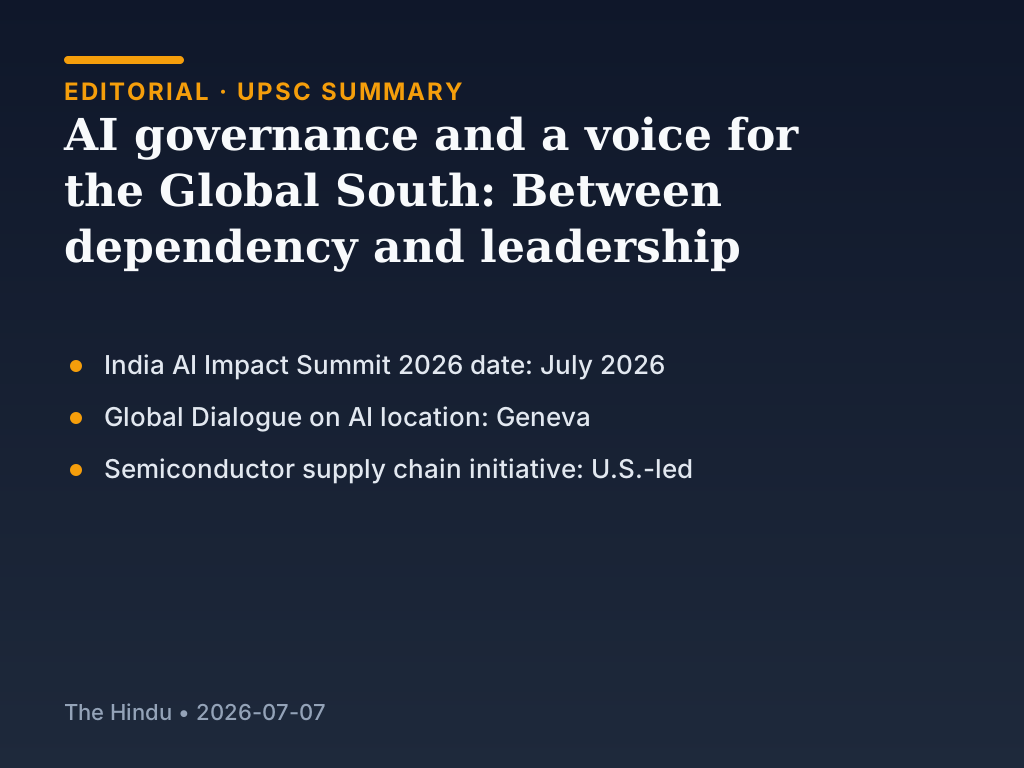
The editorial discusses India’s approach to AI governance and argues that India is at risk of drifting from a Global South–centric vision toward dependency on U.S.-led technology and policy frameworks.
It begins by contrasting the orientation of the India AI Impact Summit 2026—where India sought to center the Global South’s harms, equity, and inclusion in AI discourse—with earlier summits focused on existential risks.
Over time, the summit’s momentum shifted towards attracting capital for AI development and accelerating adoption through domestic use cases.
This shift coincided with India positioning itself within a 'middle power' narrative, which arguably weakened solidarity with Global South priorities.
India’s alignment with a U.S.-dominated semiconductor supply-chain initiative has been cited as compromising its strategic autonomy.
Concerns have emerged about whether the U.S. will be a reliable partner for global AI governance, as its foreign policy appears disinterested in multilateral rule-making.
Related current affairs
- Socialist surge: Affordability issues propel democratic socialists in the United States
- Kerala can become India’s model AI governance State
- The extent to which capital markets and economies become intertwined with AI have become intertwined with AI: global AI risks
- OpenAI signs to develop ‘frontier AI’ models, but issues raised about safety and monitoring
- The incident, which evoked science fiction scenarios about humans losing control of dangerous AI systems, comes at a delicate time for OpenAI
- BRICS Science Academies Forum Meeting 2026 concludes at IIT Hyderabad; focus on AI for sustainability and Global South cooperation