What happened
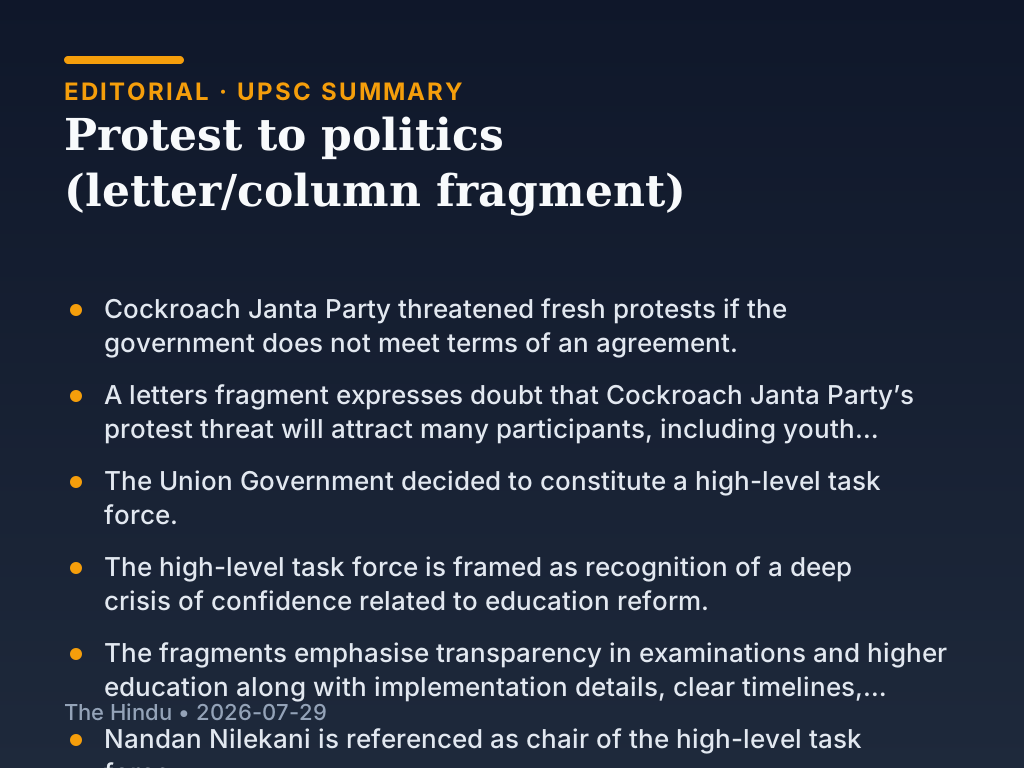
Letters-to-the-Editor fragments describe education-policy conflict and governance response in the form of protest threats and a proposed high-level task force. One fragment mentions the Cockroach Janta Party’s threat that fresh protests could occur if the government does not meet terms of an agreement. The fragment also expresses doubt that the threat will attract many participants, including youth and students.
A second fragment discusses a Union Government decision to constitute a high-level task force. The fragment frames the task force as recognition of a deep crisis of confidence and links education-reform goals to preparing India’s education system for a rapidly evolving knowledge economy. The fragment highlights transparency in examinations and higher education and connects the appointment of Nandan Nilekani as chair with combining technology innovation and institutional capacity.
Background and earlier position
Student-facing governance relies on whether education reforms come with operational clarity: what changes, when those changes will happen, how results will be measured, and how students and the public can verify delivery. The emphasis on timelines, measurable outcomes, and public accountability indicates a long-running concern that education reform promises are not perceived as sufficiently detailed or verifiable by students.
Protest politics can intensify when political actors believe negotiated commitments are not being implemented. The Cockroach Janta Party’s reported warning of fresh protests if the government does not meet agreement terms indicates a continuing negotiation–implementation trust gap. The same fragment questions the likely scale of student participation.
Related current affairs
- Naveen urges Union govt. to hold dialogue with students
- Letters to the Editor
- High-Powered Task Force invites suggestions for reforms in public examinations
- Promise of gender equality must be upheld
- Terror suspect plans violence at Delhi protest; STF cites Pakistani links
- PM sets up high-powered task force on exam reforms led by Nandan Nilekani