What happened (2026 lens): Iran’s parallel engagement with Kabul and multiple Afghan factions without formal Taliban recognition
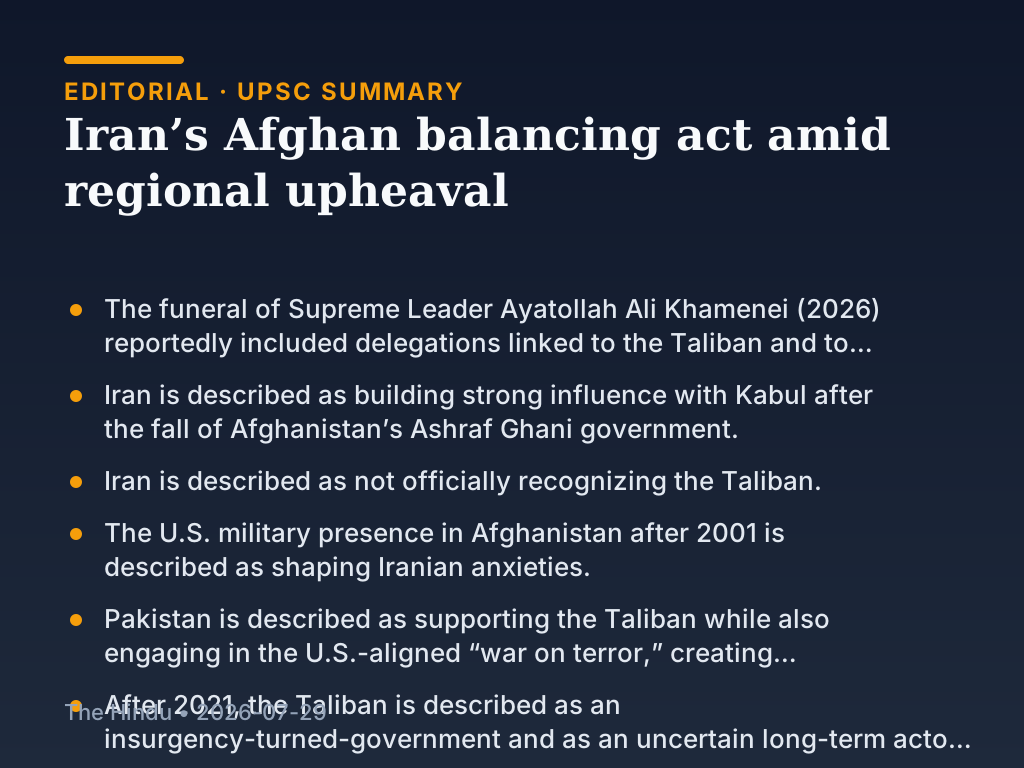
Iran’s Afghanistan policy after the Taliban’s return in 2021 is described as a balancing approach that continues into 2026 amid war in West Asia. A 2026 ceremonial moment is highlighted: the funeral of Supreme Leader Ayatollah Ali Khamenei, where delegations linked to the Taliban and delegations linked to the leadership of Afghanistan’s Northern Alliance were present. Iran’s multi-track stance is linked to the simultaneous presence of Taliban-linked and Northern Alliance–linked delegations.
Background and earlier position: influence with Kabul alongside long-standing skepticism toward the Taliban
Iran is described as having built strong influence with Kabul after the fall of Afghanistan’s Ashraf Ghani government. Iran does not officially recognize the Taliban, reflecting long-standing skepticism and Iran’s historical support for Afghanistan’s Northern Alliance rather than the Taliban as a governing authority.
The background is also tied to the post-9/11 U.S. military presence in Afghanistan, which is described as shaping Iranian anxieties. Pakistan’s role is highlighted as dual: Pakistan is said to support the Taliban while also engaging with the U.S.-aligned “war on terror,” creating overlapping and confusing regional interests. The Osama bin Laden episode is cited as an example of regional entanglement.
What changed after 2021: Taliban as governing authority plus uncertainty about long-term stability
Related current affairs
- Afghanistan consulate in Delhi marks first-ever 'Taliban day' protest
- Gunmen kill high-ranking Taliban official
- A Palestinian state is the foundation for regional peace
- Saudi Arabia-Pakistan-Türkiye deal shows shifting stance with U.S.: Iran
- Chinɑ 'to send 's' should missiles to Iran' (or similar)
- Pak. strike on Kabul drug treatment centre may be war crime: Amnesty