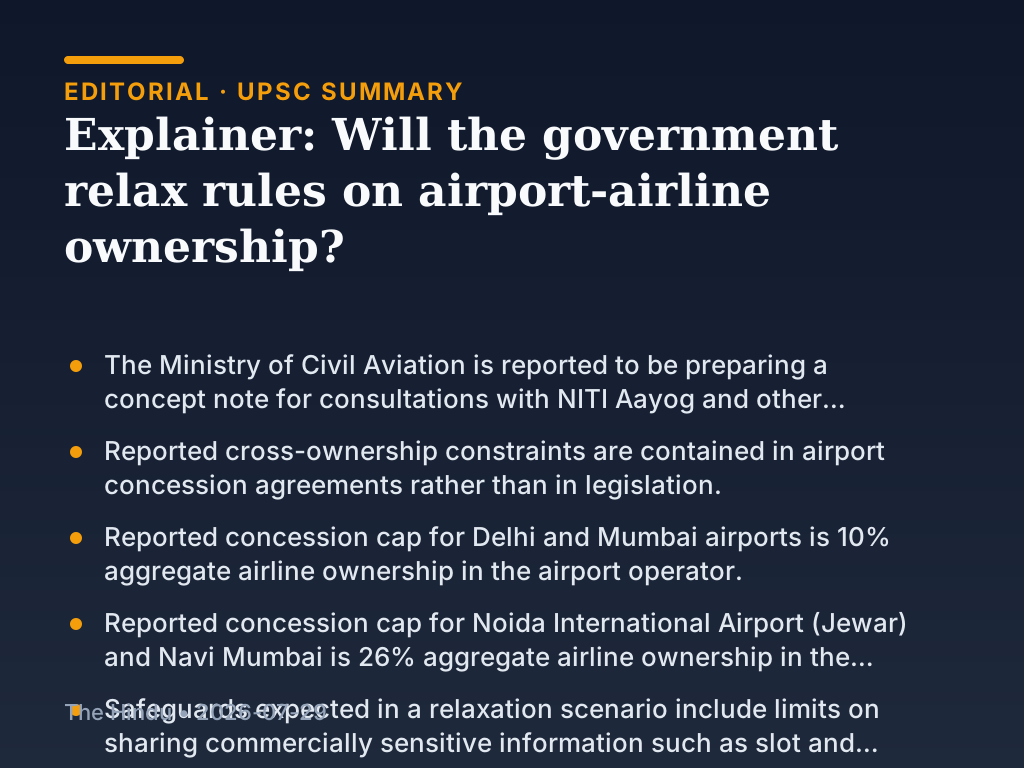
The Ministry of Civil Aviation is reportedly preparing a concept note for consultations with NITI Aayog and other ministries. After consultations, the Ministry of Civil Aviation is expected to place a proposal before the Union Cabinet.
Background and earlier position
The reported cross-ownership constraints are contained in airport concession agreements rather than in legislation. Delhi and Mumbai airports: aggregate airline ownership in the airport operator is capped at 10%.Noida International Airport (Jewar) and Navi Mumbai: aggregate airline ownership in the airport operator is capped at 26%.
A key implication highlighted is the reverse possibility: depending on ownership structure, concession caps could also limit an airport operator’s ability to take significant stakes in airlines.
What changed now (why the government is revisiting the issue)
Related current affairs
- AAI got request for waiver of airport-airline cross ownership restriction: Govt.
- IndiGo, AI oppose Adani’s airline entry
- Centre considering to lift restrictions on airport ownership
- Why India’s R&D system needs a map of where funds really go
- BJP accuses Karnataka government of ‘double standard’ over Adani Group
- Adani calls on Karnataka CM, sparks political speculation