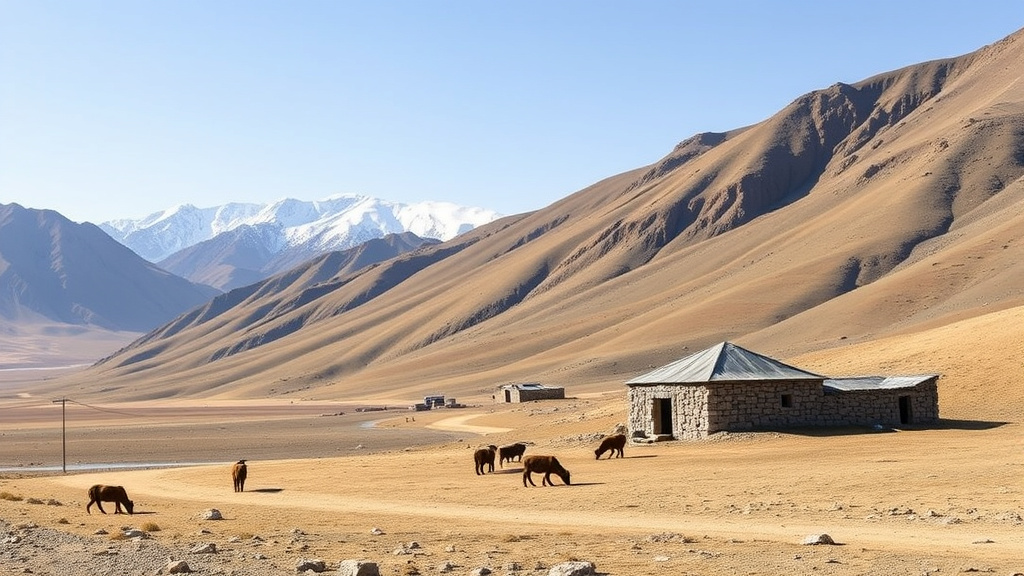
Residents from villages along the Line of Actual Control (LAC) in Ladakh told a Parliamentary panel that access to traditional grazing grounds was lost after border tensions with China escalated in 2020. The issue matters for UPSC because it connects frontier livelihoods with border security and civil-military coordination in a sensitive mountain region.
A 15-member delegation from villages around Maan Pangong A and B in Leh, Ladakh asked that nomadic pastoralists not be denied controlled access to India’s traditional grazing lands in coordination with security agencies. The delegation argued that the continued presence of local communities in these frontier areas is important for national security.
Former councillor Konchok Stanzin of Chushul said the Army stops villagers when they go to graze livestock. He also said residents are prevented from bringing loose earth to build huts and from collecting firewood in no-go zones. He said access had been free before May 2020.
The wider border context is the India-China standoff in eastern Ladakh. Since April 2020, the Chinese People’s Liberation Army (PLA) has amassed troops and armaments along the 3,488 km LAC, moved into Indian territory, and constructed fortified structures and defences to try to change the status quo.
Both sides have concluded agreements to maintain peace, and patrolling has been subject to a moratorium after the June 15, 2020 Galwan clashes. The Parliamentary panel assured the residents that it would examine their concerns.
Why this matters for UPSC
Related current affairs
- Border row: 12 injured in miscreants attack; Press Trust of India (PTI) report
- Shah reviews indigenous border security technology in West Bengal
- Government must talk to Sonam Wangchuk, that is its duty
- Chinese incursion / 40 years ago (archival reference block)
- Report rapid population changes along border areas, Shah tells SPs
- Amit Shah addresses Land Border Districts’ SP Conference-2026; outlines Smart Border and coastal security approach