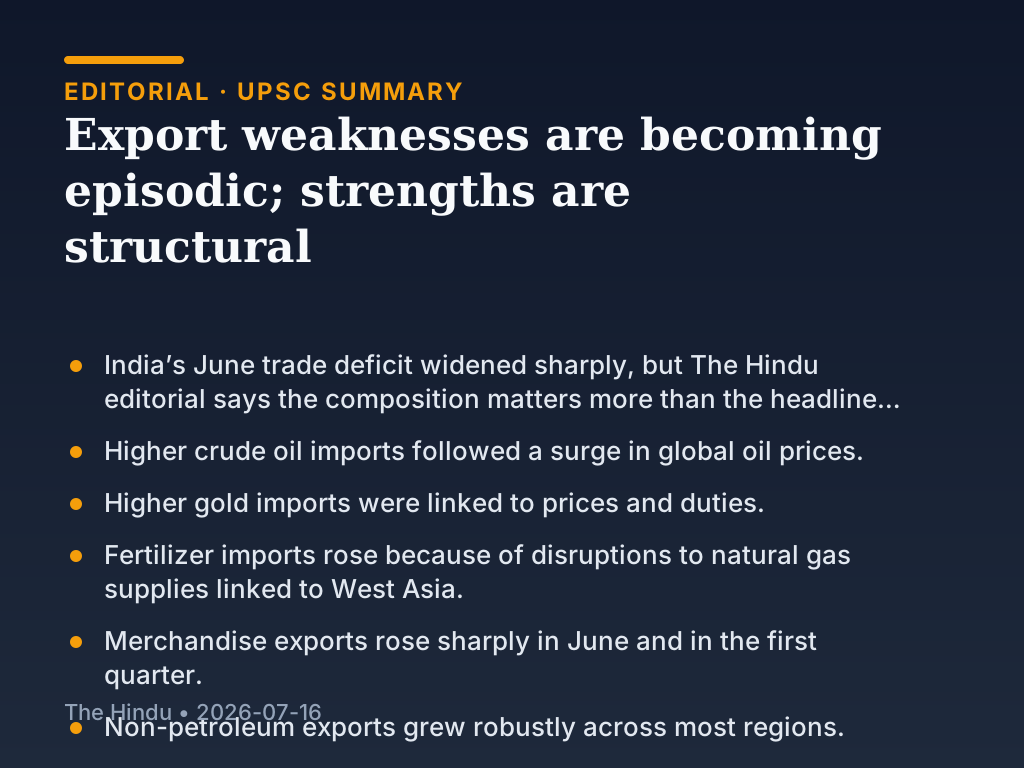
India’s June trade deficit widened, but the trade data do not point to a broad deterioration in export capacity. The stronger import bill was driven mainly by crude oil, gold, fertilizers, and electronic goods, while merchandise exports rose sharply and non-petroleum exports remained robust.
What happened in June
India’s June trade deficit looks alarming at first glance, but the composition of imports and exports gives a more nuanced picture.
Imports rose because of four pressures: higher crude oil imports after a surge in global oil prices, higher gold imports due to prices and duties, higher fertilizer imports because of disruptions to natural gas supplies linked to West Asia, and higher electronic imports because of India’s expanding domestic manufacturing and assembly needs.
At the same time, merchandise exports rose sharply in June and in the first quarter, and non-petroleum exports grew strongly across most regions.
Related current affairs
- Indian bonds crumble as oil surges over $90 a barrel
- India’s trade data show the economy is handling the West Asia crisis—exports hold up while imports lift the deficit
- A quick-data box above the charts (data point / petroleum-linked growth)
- Decoding India’s growth in merchandise exports
- Uttar Pradesh: A Decade of Fiscal Discipline (Economy infographic)
- Rising rupee, new Trump tariffs — track the headwinds