What happened (and what to track now)
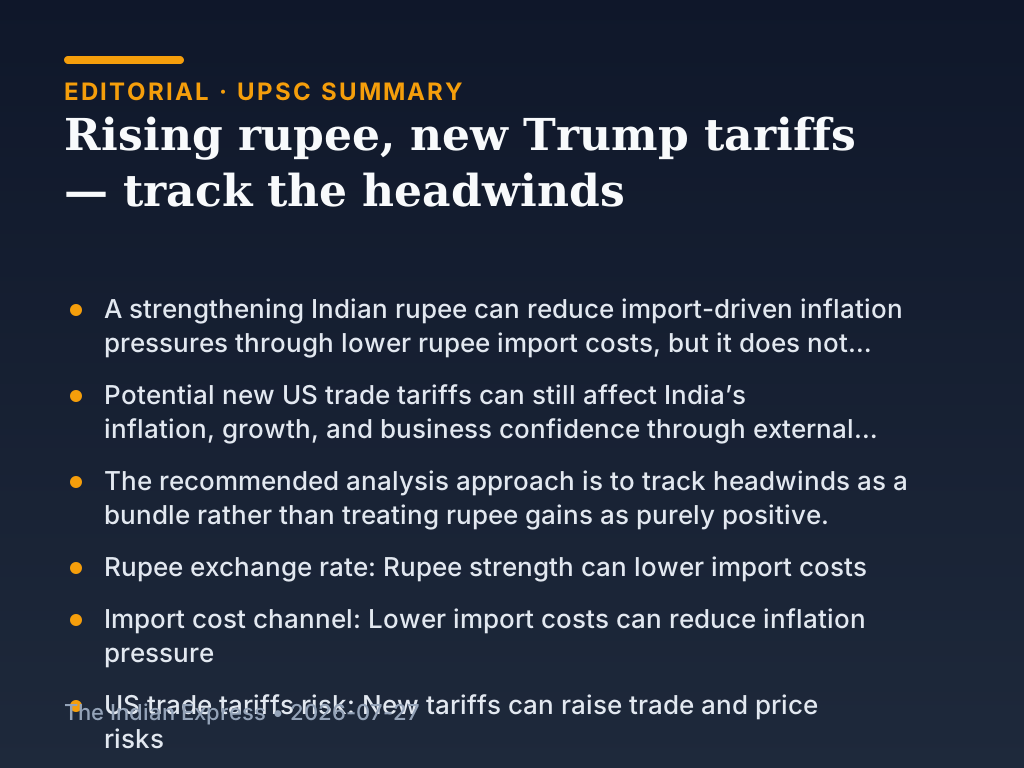
A strengthening Indian rupee is often read as a positive sign because it can support price stability through cheaper imports. However, external economic shocks—especially the risk of potential new United States trade tariffs—can still affect Indian inflation, growth, and business confidence. The practical takeaway for current analysis is to track the rupee together with trade-policy headwinds, not treat currency gains as a standalone “good news” factor.
Background: why rupee strength can still coexist with risks
In macroeconomics, the exchange rate (the rupee’s value versus foreign currencies) affects the domestic economy through import costs and expectations. A stronger rupee can reduce the rupee price of many imported goods, which can ease inflation pressures. But inflation and growth are also shaped by other channels such as global demand, export competitiveness, cost of commodities, supply-chain conditions, and policy uncertainty.
What changed now (the joint “headwinds” view)
The key change in the way investors and policymakers should interpret the situation is the joint reading of two forces: A strengthening rupee, which may support import prices. Potential new US trade tariffs, which can act as an external shock by changing global trade conditions and risk sentiment. The argument emphasizes that even when the rupee improves, US tariff risk can still create uncertainty that feeds into inflation dynamics, investment decisions, and business confidence.