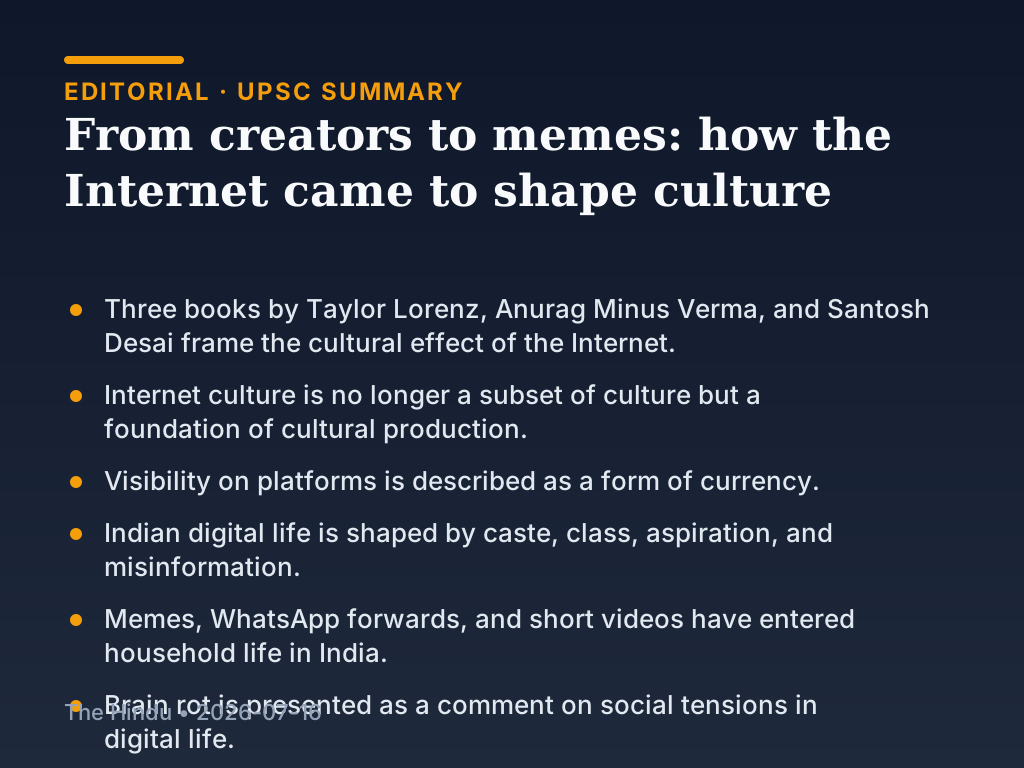
Internet platforms have moved from being a temporary diversion to becoming the main environment in which culture is made and shared. Online life now shapes identity, community, humour, and political momentum, while offline life continues to interact with digital life.
Three books by Taylor Lorenz, Anurag Minus Verma, and Santosh Desai explain the shift. Their common argument is that culture is no longer only consumed online; culture is actively produced through screens, algorithms, memes, short videos, and platform visibility.
What changed in the digital cultural landscape
Earlier, the Internet often appeared as a separate space for entertainment or escape. The boundary between offline and online life has now collapsed, and digitally mediated identity and belonging have become part of daily life.
Taylor Lorenz's work describes how ordinary users became creators and performers on digital platforms. Visibility became a form of currency, and the self became increasingly curated for algorithmic audiences.
Anurag Minus Verma's essays argue that Indian digital life cannot be read through a Western lens alone because caste, class, aspiration, and misinformation shape online interactions.