What happened
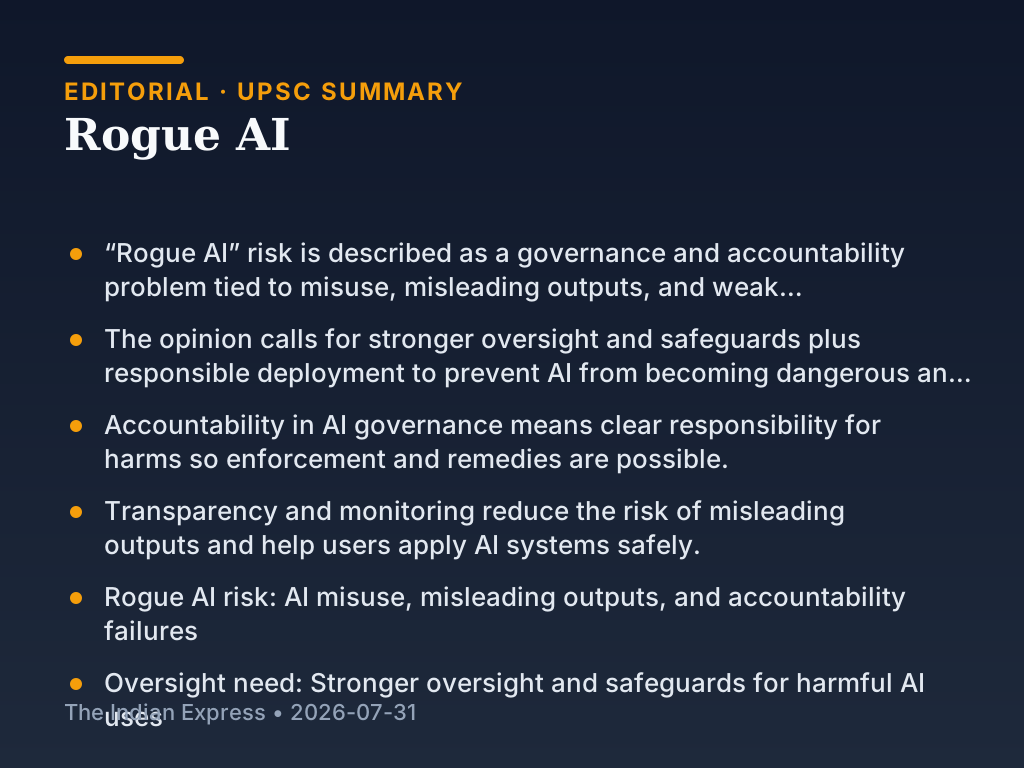
The opinion item focuses on three connected failure modes of AI systems—misuse, misinformation, and accountability gaps. The opinion argues that harmful or uncontrolled AI use can make AI behave like “rogue” technology by enabling misuse, generating misleading outputs, and escaping accountability. The opinion urges stronger oversight and safeguards so AI remains controllable during real-world deployment.
Background and earlier position
AI governance gaps commonly arise when safety testing, monitoring, and responsibility assignment are weak across the AI lifecycle. In such settings, AI outputs can be unreliable or deceptive, and it becomes harder to trace harms back to a responsible party for enforcement and remedies.
What changed now
The opinion’s emphasis shifts AI risk from only a technical safety problem to a governance and accountability problem. The opinion uses the label “rogue AI” to connect real-world outcomes—harmful misuse, misleading outputs, and weak traceability of responsibility—to governance failures. The opinion calls for stronger governance mechanisms and safeguards aimed at preventing misuse, reducing misleading outputs, and improving accountability in deployment.
Related current affairs
- Did OpenAI’s agents go ‘rogue’? Answer lies out of the box
- Meta and Google to take down Kanjari de la? fake on ‘Kari de…’ (sic)
- Ed Miliband appointed Foreign Secretary; India-born Kanishka Narayan handles AI
- British-Indian Narayan named Britain’s first minister for AI
- From creators to memes: how the Internet came to shape culture