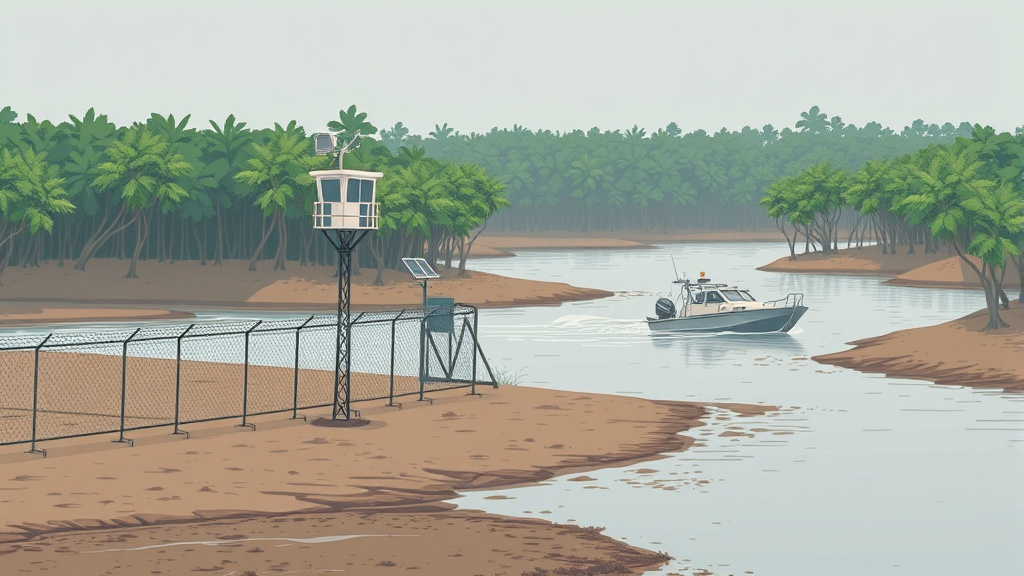
The Union Home Ministry is preparing to fence about 90 km of the India-Bangladesh border in the Sundarbans. The Border Security Force (BSF) has begun a feasibility and technical study for the land border, while riverine stretches will depend on floating border outposts, surveillance equipment and marine patrols.
The issue matters because the Sundarbans is a difficult delta region of mangroves, swamps, embankments and creeks. Much of the stretch lies near the Sundarbans Wildlife Sanctuary, where construction is restricted, so border management has to balance security with environmental limits.
Background and earlier position
The Sundarbans border has long been difficult to secure with conventional fencing because rivers and tidal channels break the continuity of land barriers. The BSF has therefore used floating border outposts in riverine stretches and is now adding a technical study for the land portions that can support fencing.
Officials have also indicated that local residents were told fencing is necessary for national security. Residents and businesses, however, have raised concerns about land acquisition and possible displacement.
What changed now
Related current affairs
- Security meets ecology as BSF mulls fence in Sundarbans
- Shah reviews indigenous border security technology in West Bengal
- Briefly: Union Home Minister Amit Shah reviews BSF security amid rising concerns
- Amit Shah inspects indigenous technologies for border security at Jhumagachh BOP, Siliguri and lays foundations for BSF projects
- BSF to fence Sundarbans along Bangladesh border