What happened (the language lesson clarifies two common confusions)
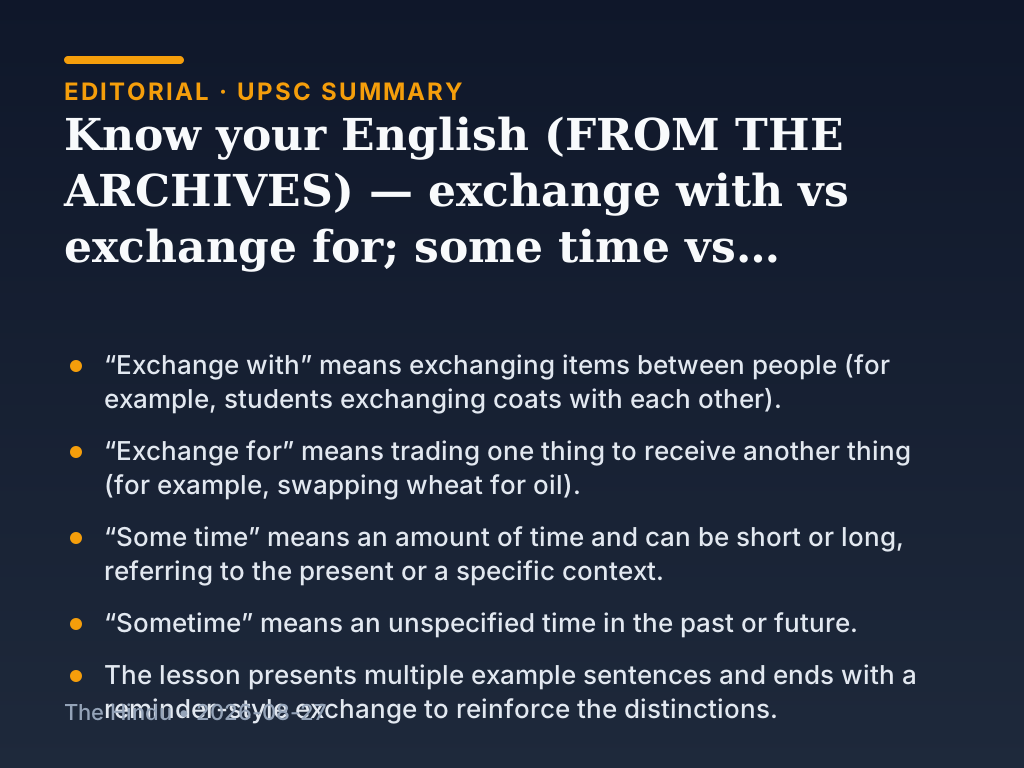
The Hindu’s 2001 conversation-style English lesson corrects and explains two sets of commonly mixed-up phrases. The lesson distinguishes “exchange with” from “exchange for,” and it distinguishes “some time” from “sometime,” using simple examples that show how meaning changes with the phrase choice.
Background and earlier position (how the confusion typically appears)
Learners often treat these word pairs as interchangeable because both involve “exchange” or “time.” The lesson’s core point is that English uses different prepositions and spacing to signal different meanings. Without that distinction, a sentence can communicate the wrong idea.
What changed now (the corrected meaning rules)
The lesson offers clear meaning rules based on everyday scenarios.
Related current affairs
- From the archives: Know your English
- Know your English: Can we say 7 into 20 is 140? (usage of into/times/multiply)
- From the archives: How was your trip to Madras? / Know your English (conversation on prepositions and idioms)
- KNOW YOUR ENGLISH: The rejection punctured his enthusiasm (and ‘dead on arrival’ / ‘puncture’ idioms; ‘on Sunday’ usage)
- “What is the difference between while and whilst?” (reader Q&A)
- From the archives: Know your English — “not up to scratch”, “question tags”, “carte blanche”, and “a unique/euthanasia law”