What happened: an archived “Know your English” dialogue teaches correct idioms and prepositions
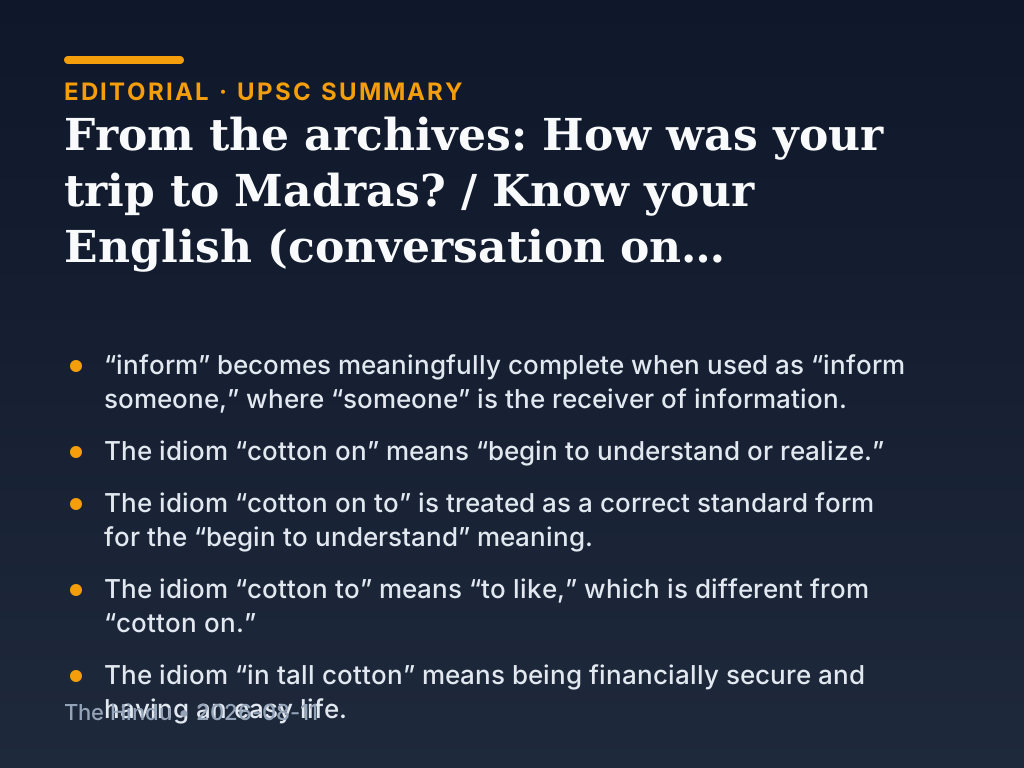
The Hindu published an archived conversation under “Know your English” using simple, everyday examples to correct common English mistakes. The dialogue starts with a travel-style anecdote to explain the difference between the verb “inform” and the verb pattern “inform someone,” where English usage needs a direct object (a person) to make the meaning complete.
The conversation then expands into idioms and their correct forms. The idiom “cotton on” is explained as “to begin to understand or realize.” The dialogue also highlights that English usage changes meaning depending on whether learners use “cotton on to,” “cotton to,” or a related incorrect pattern. It further teaches the idiom “in tall cotton,” meaning “financially secure” and having an easy life. A teacher-like character corrects misuses and gives short practical example sentences to show the meaning and the connotation (the implied tone) of each idiom.
Background and earlier position: common learner confusion in prepositions and verb objects
Learners commonly mix up verb patterns in English when a verb usually needs an object (for example, a person who receives information). Many also overgeneralize idioms by attaching or removing prepositions without checking the standard form. The archived dialogue addresses exactly these two areas: (1) verb-object completeness and (2) idiom variants whose meanings shift with small wording changes.
What changed now: clearer standard forms for meaning-preserving English
Related current affairs
- Know your English (FROM THE ARCHIVES) — exchange with vs exchange for; some time vs sometime
- From the archives: Know your English
- Know your English: Can we say 7 into 20 is 140? (usage of into/times/multiply)
- KNOW YOUR ENGLISH: The rejection punctured his enthusiasm (and ‘dead on arrival’ / ‘puncture’ idioms; ‘on Sunday’ usage)
- “What is the difference between while and whilst?” (reader Q&A)
- From the archives: Know your English — “not up to scratch”, “question tags”, “carte blanche”, and “a unique/euthanasia law”