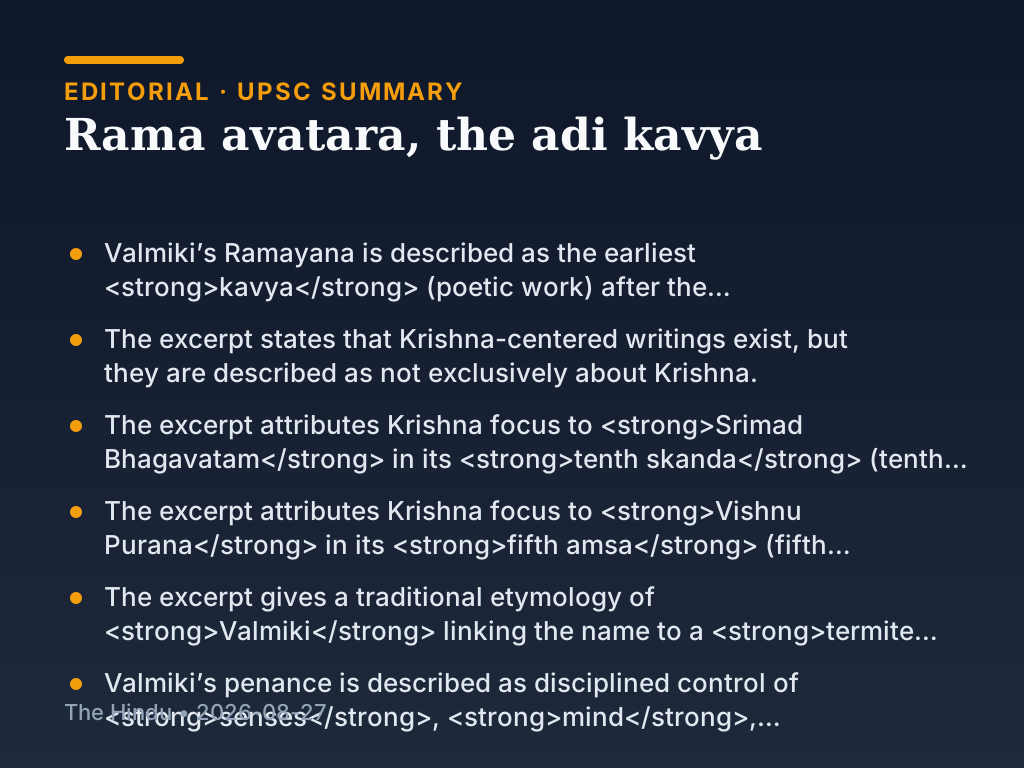
Discussion explains Valmiki’s Ramayana as the earliest kavya after the Vedas and links its origin to Rama’s reign in Ayodhya and Valmiki’s strict discipline of the senses and mind.
GS1The HinduGS1Indian LiteratureRāmāyaṇaValmiki
What happened (core claims from the discourse excerpt)
The discourse excerpt presents a traditional literary-theological explanation for why Valmiki’s Ramayana is treated as the earliest kavya (poetic work) after the Vedas. It compares Ramayana’s position with other major religious texts and traditions that are related to themes of dharma, devotion, and ideal personhood.
The excerpt makes several connected claims:
- The Ramayana is described as the earliest kavya after the Vedas. - Writings connected to Krishna are said to exist, but they are not described as being exclusively about Krishna. - The Srimad Bhagavatam’s tenth skanda (ten “sections”/books) and the Vishnu Purana’s fifth amsa (a “part/segment”) are described as focusing on Krishna.
Background and earlier position: how the discourse contrasts texts and meanings