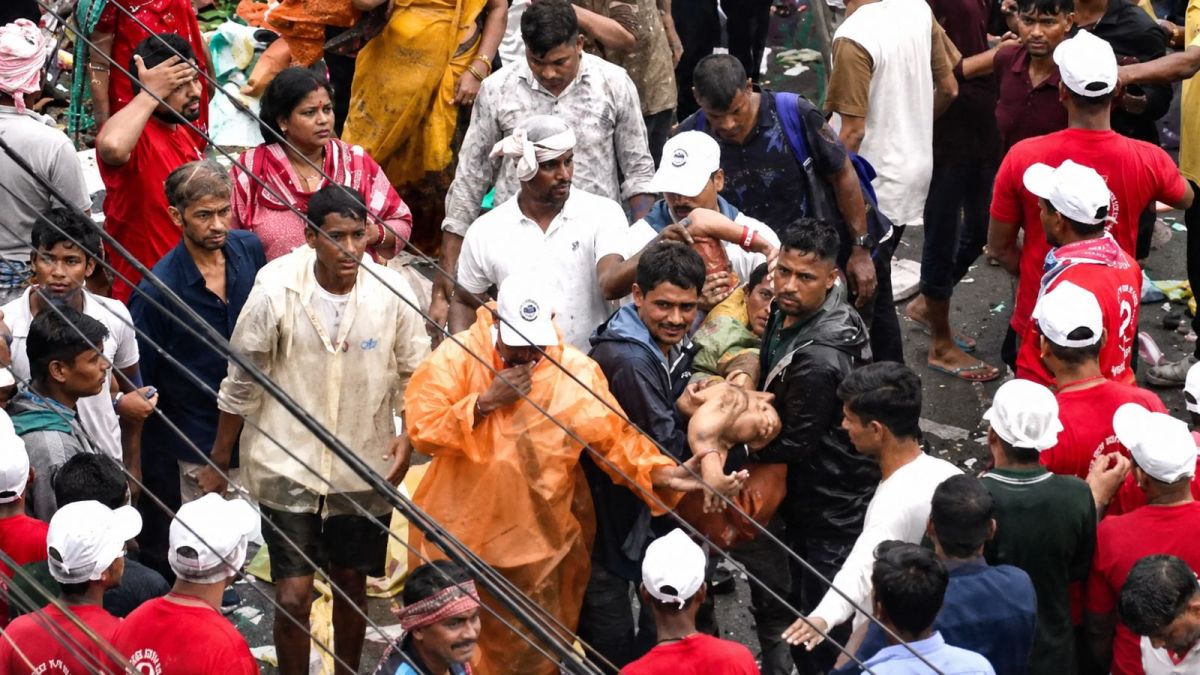
A crowd surge during the Jagannath Rath Yatra in Puri left two people dead and several others injured. The incident on Badadanda, the road in front of the Shree Jagannath Temple, is relevant for UPSC because it combines Indian culture, public safety, and disaster management.
The surge occurred near Marichikote Chowk when devotees were pushed aside to make way for an ambulance moving through the crowd. People fell and were injured. Many injured devotees were taken to the district hospital, some with fractures, and around 100 people were admitted for treatment.
Lakhs of devotees braved rain, but the chariots did not reach the Gundicha Temple and were stopped midway. The pulling was scheduled to resume the next day.
The Chief Minister’s Office said the festival was otherwise orderly and there had been no systemic crowd-management breakdown. Former chief minister Naveen Patnaik expressed grief, offered cooperation to those affected, and urged better crowd control.
Why the event matters for UPSC
The Puri incident sits at the intersection of GS2 governance and GS3 disaster management. It offers a practical case study on how state authorities manage large religious congregations, maintain safe movement corridors, and respond to medical emergencies without avoidable panic.
Related current affairs
- Tamil Nadu: C. Joseph Vijay blames police for Karur stampede; announces memorial; says police had power to cancel crowd events
- Fly kites away from high tension transmission lines (advertisement)
- Protesters near Janarantar manage crowd; moments of New Delhi disturbance (photo caption)
- ‘Force gradient’ adopted for crowd control not as per standards, training, says Rafiq
- A.P. clears security plan for Pushkaram festival
- Nine killed in blast at illegal firecracker unit in Ahmedabad