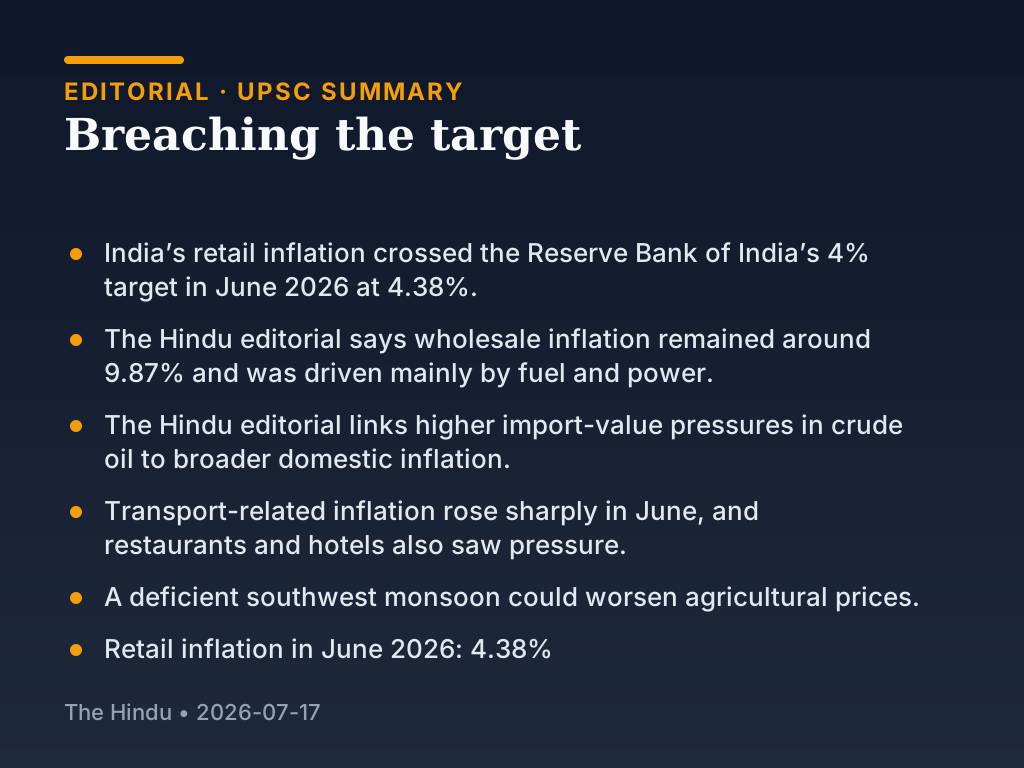
India’s retail inflation rose to 4.38% in June 2026 from 3.93% in May, crossing the Reserve Bank of India’s 4% target under the current Consumer Price Index series for the first time. The increase matters because inflation is no longer confined to one segment; price pressures are spreading across producers, transport, food, and household consumption.
What happened
India’s consumer inflation moved above the Reserve Bank of India’s target band midpoint. Broad price pressure is now reaching households after first appearing at the producer level.
The Wholesale Price Index remains high at around 9.87%. Fuel and power continue to drive producer inflation strongly.
Background and earlier position
India’s inflation-targeting framework uses the Consumer Price Index for the Reserve Bank of India’s monetary policy objective. The target is 4% with a tolerance band of ±2%. The consumer measure differs from the Wholesale Price Index, which tracks producer-level price movements.
Related current affairs
- Retail inflation climbs past RBI target to 4.4%
- Govt. taking nation towards economic crisis, says Congress
- Food price surge / June PPI inflation: key points (text box)
- Food price surge pushes WPI inflation to nearly 10% in June; core eases
- Complicates RBI’s choice
- Government starts calibrated release of onion buffer stocks via Kanda Express and road transport to major consumption centres