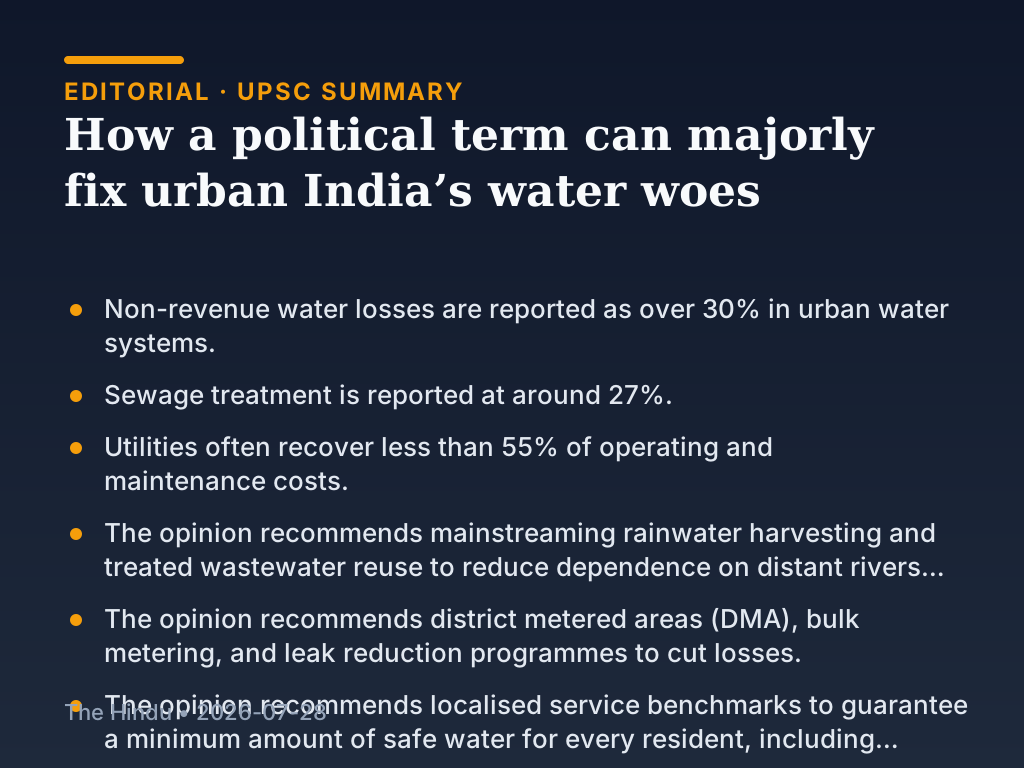
How a political term can majorly fix urban India’s water woes
An opinion in The Hindu argues that urban water improvements can be achieved within one political term by managing water as a performance-and-resilience agenda rather than project counting.
GS3GS2GS1The HinduGS3Urban water managementNon-revenue water (NRW) lossesSewage treatment and wastewater reuse
What happened (proposed direction for urban water reform within one political term)
A The Hindu opinion recommends that urban water reform should be planned and run as a performance-and-resilience agenda rather than as a project-counting exercise. The opinion argues that improvements can be achieved within one political term if cities and states align on measurable outcomes in four areas: source security, system efficiency, equitable delivery, and financing plus evaluation that includes long-term operations and maintenance.
Background and earlier position (current service gaps and why project counting fails)
The opinion describes urban water systems as underperforming across multiple indicators, and warns that these gaps can undermine broader development goals. It cites the following baseline stress points:
The opinion links these gaps to governance and capacity constraints, including political and regulatory bottlenecks in utilities, weak data and measurement, and financing choices that favour construction over service reliability and resilience.
What changed now (four-question agenda for action during a single cycle)