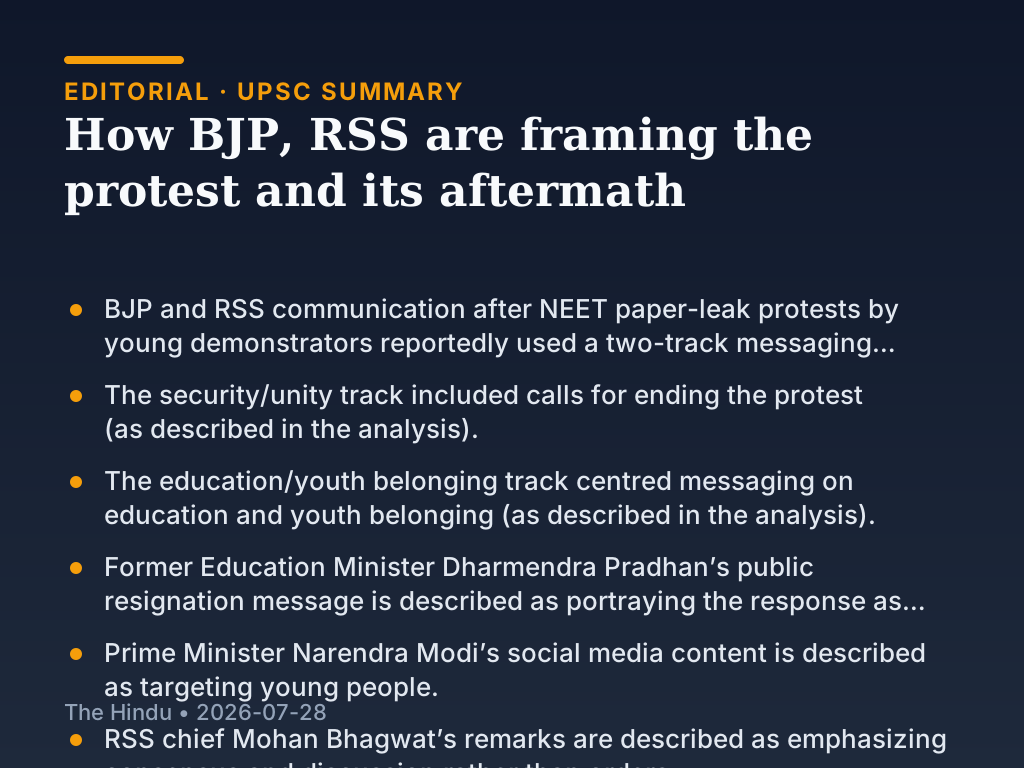
Bharatiya Janata Party (BJP) and Rashtriya Swayamsevak Sangh (RSS)-linked communication shaped how the public interpreted the NEET paper-leak protests by young demonstrators and the aftermath. The messaging strategy reportedly used a two-track approach—one track emphasizing security and national unity and another track emphasizing education and youth belonging—which matters for how governance and accountability are understood during student-led crises.
What happened: post-protest messaging aimed at interpretation and aftermath
After the NEET paper-leak protests by young demonstrators, BJP and RSS communication reportedly tried to influence public interpretation in both the immediate protest context and the post-protest “after” phase.
The communication approach described in the analysis has two tracks:
Track 1: Security and unity narrative, including calls for ending the protest
The security/unity narrative treats the protest as a matter of public order and national interest. This narrative is linked to calls to end the protest.
Related current affairs
- ‘Gen Z’ protests test the Sangh, raise uncomfortable questions
- In Modi’s outreach to Gen Z, parents are the key target
- Despite resignation, Dharmendra Pradhan remains BJP’s strongman in Odisha
- Odisha BJP leaders criticise post by MP’s daughter on Pradhan
- Congress seeks to turn tables on BJP using fund row over Ayodhya; narrative shift on stance
- BJP president holds strategy meeting for Assembly elections