What happened: Dharmendra Pradhan’s resignation after NEET-related protests
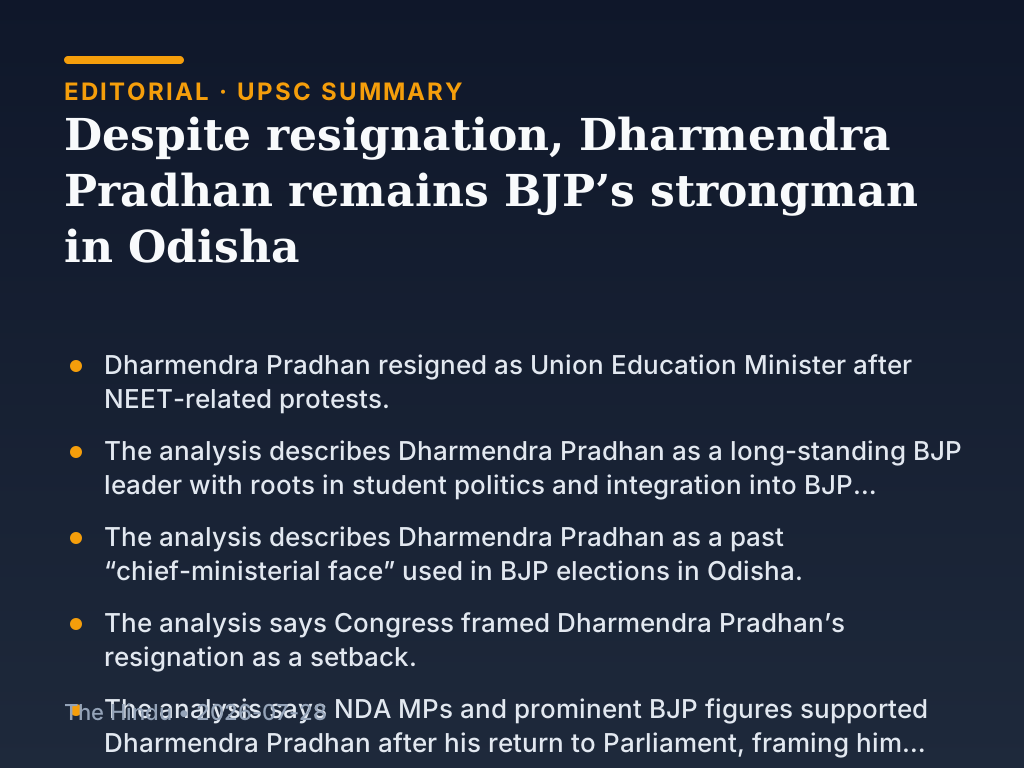
Dharmendra Pradhan resigned as Union Education Minister after protests connected to NEET. The resignation is presented in the analysis as a development that can temporarily weaken his personal bargaining power in national politics. However, the same analysis argues that Pradhan’s political weight within Odisha’s BJP structure is not automatically erased by a resignation from a Union ministry.
Background and earlier position: long party roots and BJP organisational role
The analysis links Dharmendra Pradhan’s present influence to long-standing roots in BJP student and organisational politics and to his integration into both the central government and BJP structures over more than a decade. It also describes him as an experienced “chief-ministerial face” in past elections, meaning he has been used as a prominent state-level political anchor during BJP campaigns.
What changed now: resignation does not end Odisha BJP influence
The resignation is framed as a potential setback for Dharmendra Pradhan’s immediate standing, especially because it becomes available for political messaging by opponents. The analysis states that Congress leaders used the resignation as a symbol of loss or trouble for Pradhan. At the same time, the analysis notes that supportive signals from NDA Members of Parliament and prominent BJP figures after Dharmendra Pradhan returned to Parliament indicate he is being treated more like a party “victim” of a political situation than a liability that needs to be pushed out of influence networks.
Related current affairs
- In Pradhan’s ouster, BJD sees chance to regain lost ground
- Dharmendra Pradhan’s resignation reshapes his Delhi role, not Odisha standing
- How BJP, RSS are framing the protest and its aftermath
- Odisha BJP leaders criticise post by MP’s daughter on Pradhan
- BJP president holds strategy meeting for Assembly elections
- SC to hear MP’s plea against surveillance of NEET protesters