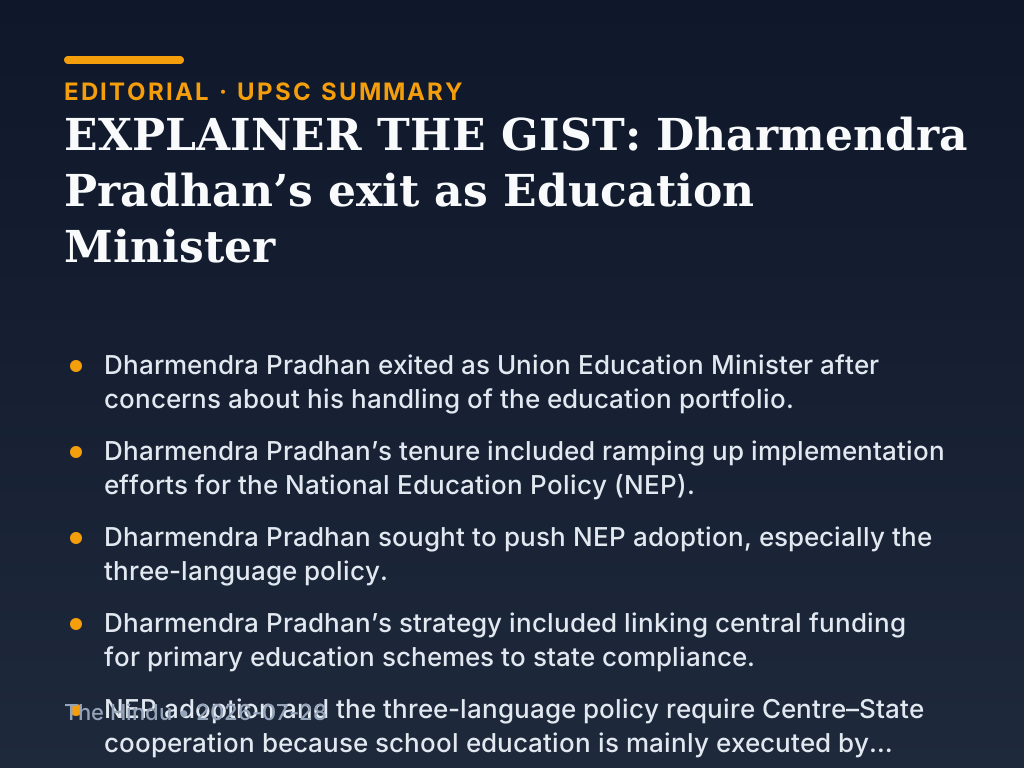
What happened: Dharmendra Pradhan’s exit and the NEP push through funding links
Dharmendra Pradhan exited as the Union Education Minister after concerns about his handling of the education portfolio. During Dharmendra Pradhan’s tenure, Dharmendra Pradhan worked to ramp up implementation efforts for the National Education Policy (NEP) and to press States to adopt core NEP elements, especially the three-language policy.
Dharmendra Pradhan also sought to strengthen NEP adoption by linking central funding for primary education schemes to state compliance, using finances as an incentive to align State actions with NEP priorities.
Background: NEP implementation needs Centre–State coordination
NEP implementation depends on coordinated action between the Union government and the States. School education is mainly implemented by States, while the Union government sets national education priorities and runs central schemes. The Union government can influence implementation through funding patterns and scheme conditions.
The three-language policy within NEP is an example of an area where coordination is needed. States must plan school-level language choices, timetables, and implementation processes, which vary across States.
Related current affairs
- The next chapter for Education Ministry
- No debate before ouster of Minister: Opposition
- Protesting students are not terrorists; Modi must apologise, Pradhan to re-sign: Rahul
- Parliament Question: Prime Minister Research Chair (PMRC) Scheme for 2026-27
- Kerala schoolteacher suspended over quiz question on Savarkar
- LETTERS TO THE EDITOR: Stop the intimidation