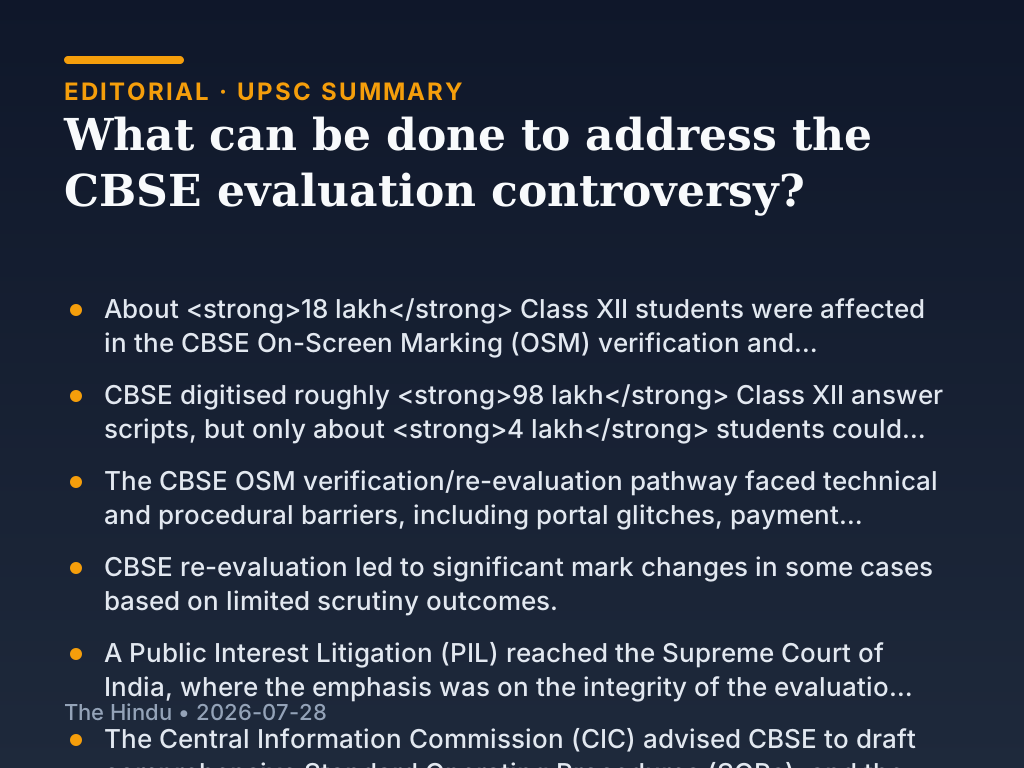
What happened: limited student access in CBSE On-Screen Marking (OSM) verification
A controversy has surrounded CBSE’s On-Screen Marking (OSM) process for Class XII evaluation, focusing on students’ ability to verify evaluated answer scripts and seek re-evaluation. The dispute is described as an access and transparency problem in a digital evaluation workflow.
CBSE digitised roughly 98 lakh Class XII answer scripts, but only about 4 lakh students could access around 11 lakh evaluated scripts for verification or re-evaluation. This gap meant that many students had no meaningful pathway to confirm whether their marks were assessed correctly.
CBSE’s verification and re-evaluation pathway has been associated with recurring technical and procedural barriers, including portal glitches, payment failures, blurred scans, missing pages, and mismatches in the available scanned materials versus evaluated materials. The issue also includes concerns that re-evaluation led to significant mark changes in some cases based on limited scrutiny outcomes.
Background and earlier position: judicial scrutiny through PIL and system-level integrity
The dispute reached the Supreme Court of India through a Public Interest Litigation (PIL). The Supreme Court’s attention is described in terms of protecting the integrity of the evaluation system rather than only addressing individual student outcomes.