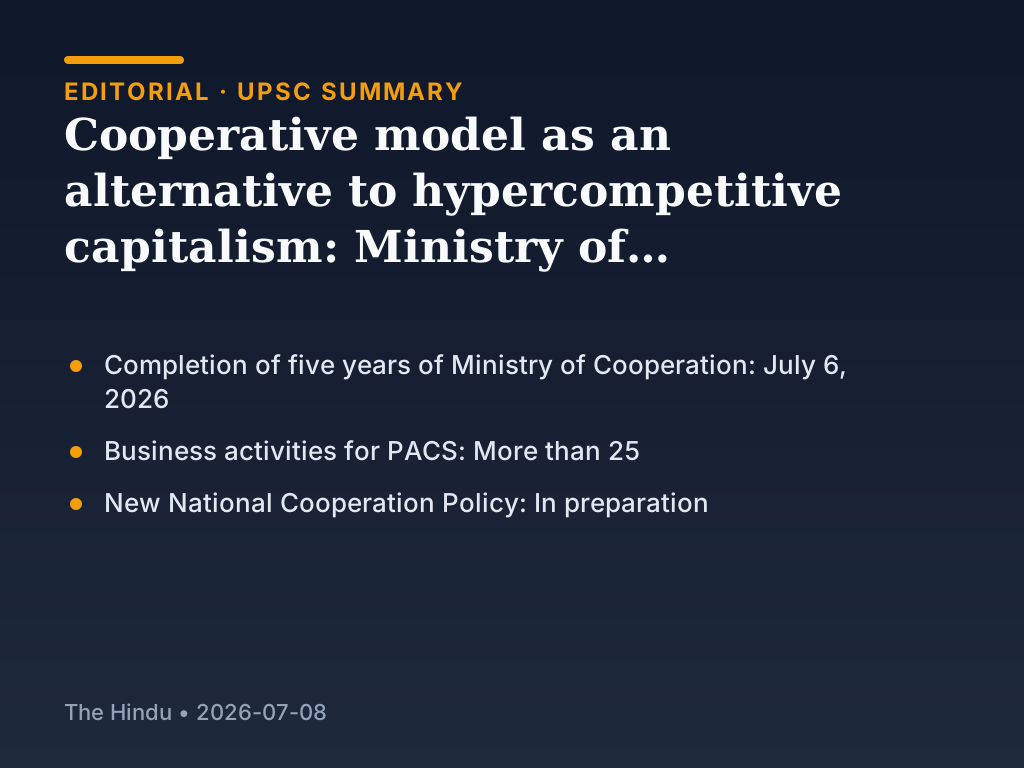
This editorial argues that hypercompetitive business models can produce social harm, and presents the cooperative model as an alternative—though one with its own imperfections. It highlights the Ministry of Cooperation’s completion of five years (as of July 6) and frames it as a bold experiment to widen cooperatives beyond their traditional concentration in agriculture and allied activities.
The piece notes that cooperatives are typically small and fragmented, and that linking them to a broader economy dominated by large digital and hyper-scaling firms requires careful balancing—an economic, political and social necessity. It outlines the Ministry’s intent to create policy coherence across multiple cooperative domains: agriculture, dairy, fisheries, banking, housing, consumer cooperatives and exports.
Achieving this will depend on collaboration with states and national cooperative federations, investment in capacity building, productive use of digital technology, and stronger market linkages. It describes how Primary Agricultural Credit Societies (PACS), supported by a reformed legal framework, can now undertake more than 25 business activities, moving beyond mere credit delivery into a wider set of rural economic services.
The editorial also points to new multi-state cooperative societies that expand market access and strengthen value chains from production to global markets, and mentions that a National Cooperation Policy is being prepared.
Related current affairs
- Expansion plan for new multipurpose/dairy/fisheries cooperatives covering all Panchayats: Targets and Margdarshika/SOP
- Cooperative life insurance firm to be set up soon: Shah
- India’s Makhana Production, Market Growth, Prices and Consumption (Domestic and Export Dynamics)
- Upper House passes Bills to change name of Kerala, strengthen NCDC
- National Cooperative Development Corporation ropes in bid to bolster cooperatives; focus on Himachal villages
- National Cooperative Development Corporation Bill gets House approval