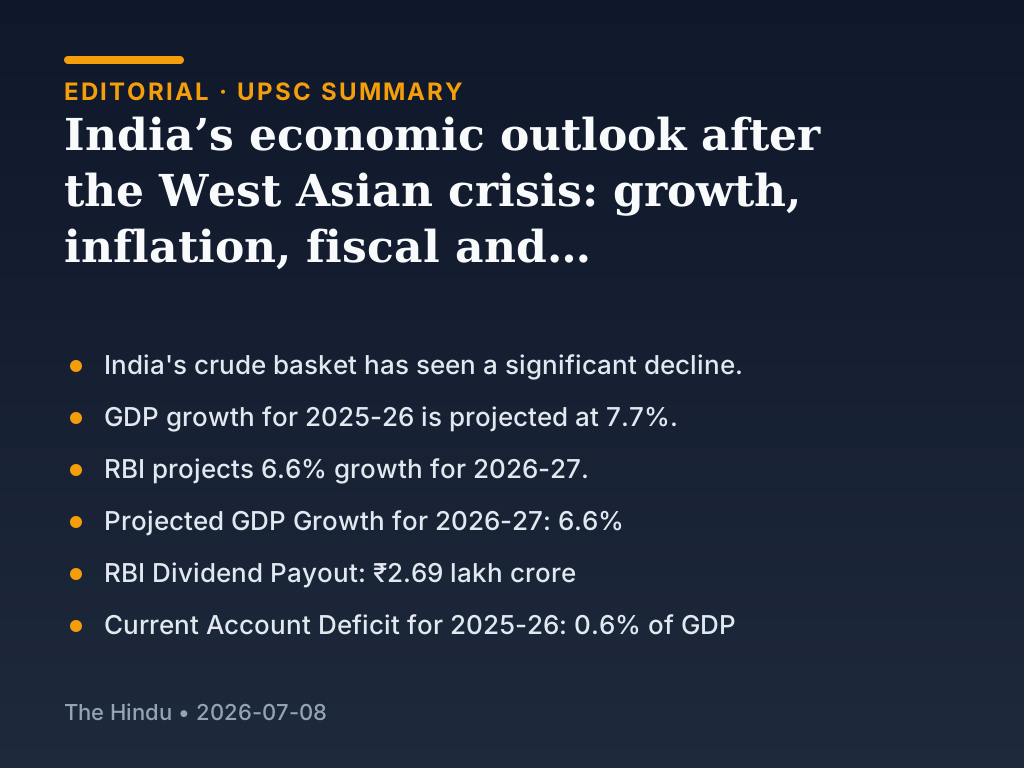
The editorial outlines how developments related to the West Asian crisis—and the anticipated reopening of the Strait of Hormuz following a US–Iran 14-point preliminary MoU—could affect India’s economy in the 2026–27 period and beyond. It argues that stabilisation of crude supplies should lower global crude prices, which in turn would improve macroeconomic conditions, assuming the truce holds.
It provides recent movements in the Indian crude basket, falling from $114.5 per barrel in April 2026 to $106.2 in May and to $86.3 as of June 24, 2026. For the remaining quarters, prices are expected to remain below earlier levels if the arrangement continues.
On growth, it cites National Statistical Office provisional estimates showing GDP growth of 7.7% in 2025–26, continuing strong post-COVID recovery. Real GVA growth is described as particularly strong, with manufacturing, trade, transport, and finance/real estate sectors exceeding 10%. Low inflation for 2025–26 is noted, with the implicit price deflator rate around 1.1%.
For 2026–27, risks to growth arise from disruptions in crude supply and a rainfall deficiency linked to El Niño. The India Meteorological Department estimates a 10% rainfall shortfall versus the long-period average, with a significant portion already realised by June 24. This poses threats to agricultural output, especially kharif crops, calling for building fertilizer reserves.
The article discusses fiscal and inflation prospects. Nominal growth might exceed 2025–26 figures due to increased expected inflation, estimating implicit price deflator-based inflation around 5.4%. A projected nominal GDP growth near 12.4% exceeds the budgeted 10.1%.
Related current affairs
- The road to peace in West Asia runs through Palestinian statehood (caption to signed piece)
- dovish RBI core inflation views; 89% of CPI items see higher prices in June vs May (chart/summary)
- A Saudi reactor is not a Saudi nuclear deal increase the risk of an arms race in West Asia?
- Cartoon/illustration caption: Deterrence in West Asia
- Deterrence in West Asia (cartoon)
- Deterrence has broken down in West Asia