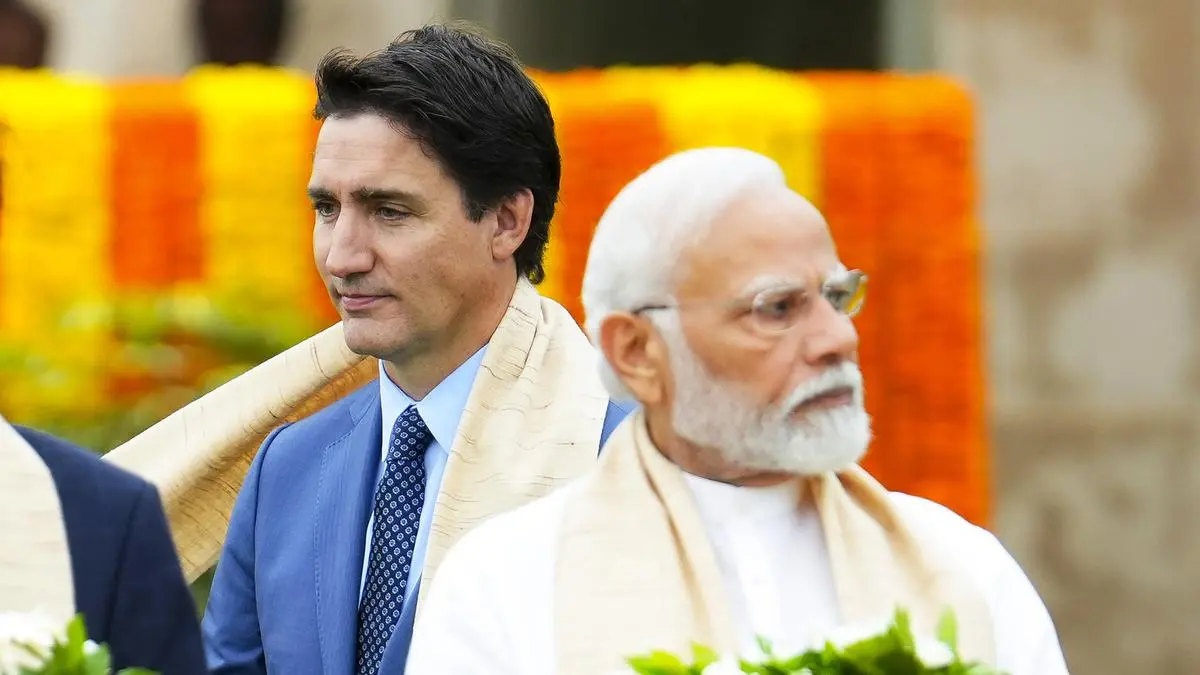
What happened
A former Indian envoy named in the Canada–India Nijjar case said the allegations against him were defamatory and that an apology is warranted. The case keeps attention on the dispute surrounding the killing of Hardeep Singh Nijjar and the continuing diplomatic and legal strain between India and Canada.
The note also refers to a criminal-syndicate probe and Canadian police investigations. The case therefore remains a mix of law-enforcement inquiry, diplomatic contestation, and competing claims about responsibility.
Background and earlier position
The Canada–India Nijjar case has already generated sustained bilateral tension. The current note does not add a legal conclusion; it adds a public rebuttal by the former envoy and shows that the controversy is still active.
Why it matters for UPSC
Related current affairs
- Gujarat liquor tragedy: eight deaths, 10 in critical condition
- Twisha case: CBI accuses husband, mother-in-law of abuse after teen’s death-in-2012 case
- Twisha case: Police accuse husband of murder/suicide (accused arrested?)
- Police notice to TISS staff over ‘suspicions/2 tests’ and arrested student case; court process mentioned
- No. 9, Amrita Shergill Marg in Lutyens’ Delhi and (left) (left) 6, Rajendra Nagar, accused/ convicted Mahboob Gogia’s last known address. (Caption)
- Police should investigate crimes; Allahabad court order (Bhupendra Pandey, Supreme Court update)