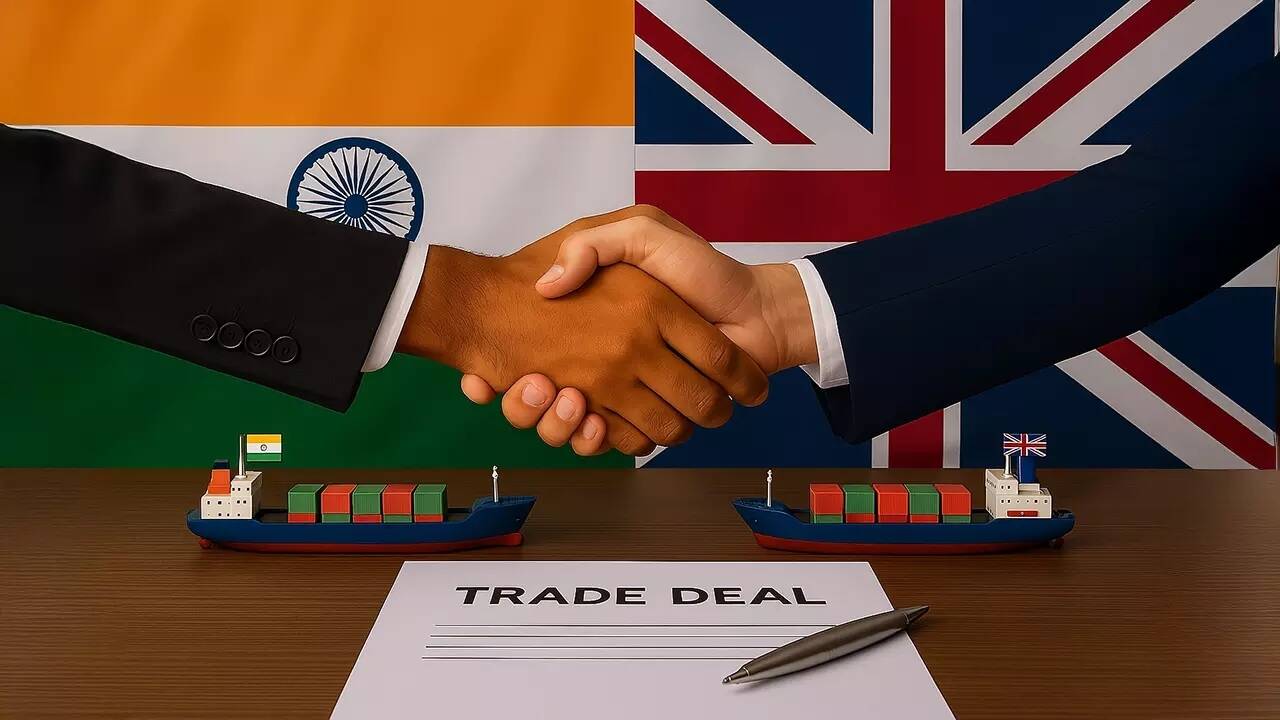
The India-United Kingdom Free Trade Agreement has come into force, according to the Press Information Bureau explainer. The operationalisation matters because the agreement is expected to reduce tariffs on selected goods, alter consumer prices for some imports, and change the competitive position of Indian exporters and domestic firms.
What the India-United Kingdom Free Trade Agreement changes
The Press Information Bureau states that the India-United Kingdom Free Trade Agreement is expected to lower tariffs on a range of goods. The agreement is also expected to make some British products cheaper in India and improve market access for Indian exporters and firms.
The explainer highlights sector-wide effects rather than a single product change. It says consumers may see reduced prices on selected imported items, while domestic industries adjust to greater competition.
Why the agreement matters for UPSC
The India-United Kingdom Free Trade Agreement is relevant for GS3 because it sits at the intersection of external trade policy, industrial competitiveness, and consumer welfare. It is also relevant for GS2 because India’s trade agreements shape bilateral economic relations with major partners.
Related current affairs
- The bittersweet realities of the India-UK FTA
- Southern African Customs Union, India revive trade talks
- India and Israel conclude second round of negotiations for proposed Free Trade Agreement
- US says interim trade deal almost ready as Jaishankar meets Rubio in Philippines
- CTIL and IIFT launch guidebook to help Indian MSMEs expand into global markets
- India and SACU sign Terms of Reference for negotiations towards a Preferential Trade Agreement