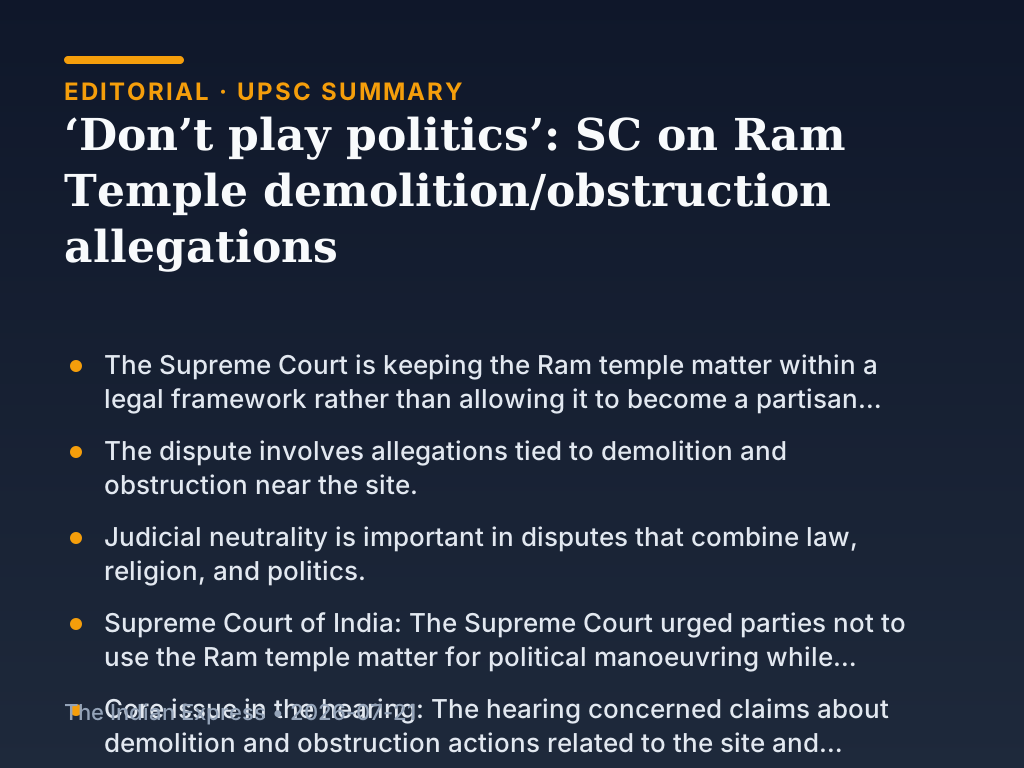
The Supreme Court has cautioned parties against using the Ram temple dispute for political manoeuvring while hearing allegations linked to demolition and obstruction near the site. The court’s intervention matters because it keeps the dispute within the framework of law, procedure, and judicial scrutiny rather than partisan mobilisation.
What happened
The Supreme Court heard arguments concerning claims of demolition and obstruction actions in the Ram temple matter. During the proceedings, the court sought clarity on the allegations and on compliance with lawful procedure, while indicating that legal proceedings should remain separate from political narratives.
Why the issue is important
The Ram temple matter is not only a sensitive religious and cultural dispute; it is also a test of how constitutional institutions handle high-voltage public controversies. The Supreme Court’s remarks underline that adjudication must rest on evidence, procedure, and legal responsibility, not on political messaging.
Related current affairs
- ‘Don’t play politics’: SC on Ram Temple controversy
- ‘Don’t play politics’: SC on Ram Temple donation theft case
- Pujari & temple research/ethics panel: ‘Hands-off approach’ on Ram Temple conclusion, court probe expected
- SC halts proceeds against Rahul Gandhi? (Top banner with ‘SC’ and ‘proceedings’)
- IN BRIEF: Add a forensic auditor to Ram Temple SIT: SC
- Where does the law stand on internet shutdowns?