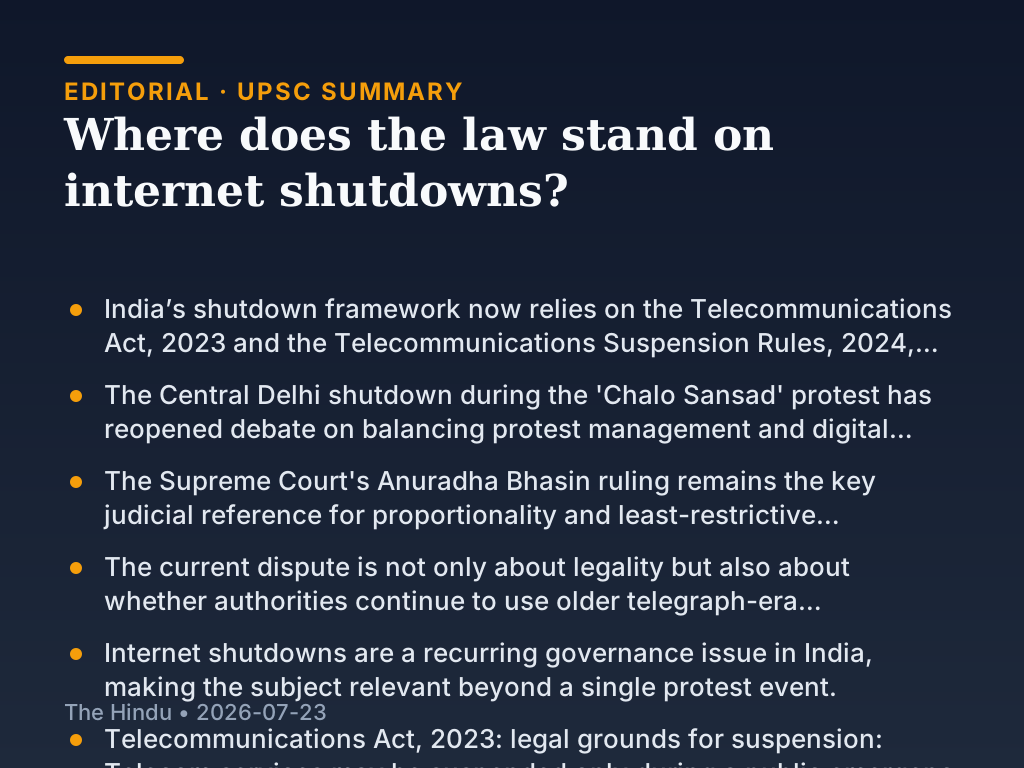
India’s law on internet shutdowns is now a test of constitutional rights, administrative proportionality, and public-order powers. The Central Delhi suspension during the 'Chalo Sansad' protest has revived scrutiny of when the State can block internet access and what procedural safeguards must follow.
What happened
Mobile internet services were shut down in parts of Central Delhi on July 20, the opening day of the Parliament Monsoon Session, and remained in force until the evening. The shutdown followed protests linked to demands including the resignation of the Union Education Minister after allegations of NEET-related paper leaks and CBSE exam irregularities.
Legal position on shutdowns
Under the Telecommunications Act, 2023, suspension of telecom services is permissible only in a public emergency or for public safety. A protest by itself is not a lawful ground. The Telecommunications Suspension Rules, 2024 require the competent authority to record reasons in writing, publish the order, keep the scope and duration limited, and consider less restrictive alternatives.
The current framework replaces the older regime under the Indian Telegraph Act, 1885 and the 2017 Suspension Rules. The note highlights concerns that some States continue to rely on older provisions in shutdown orders issued after late 2024, which can weaken the newer safeguards.
Related current affairs
- Internet cut off for mobile phone users in Central Delhi
- Comply with Bhojshala order, SC tells Centre, M.P.
- Assam NRC: SC notice to Centre on petition seeking appeal process
- ‘Don’t play politics’: SC on Ram Temple demolition/obstruction allegations
- SC halts demolition of dargahs in Rajasthan
- SC refuses to entertain plea to curb social media content