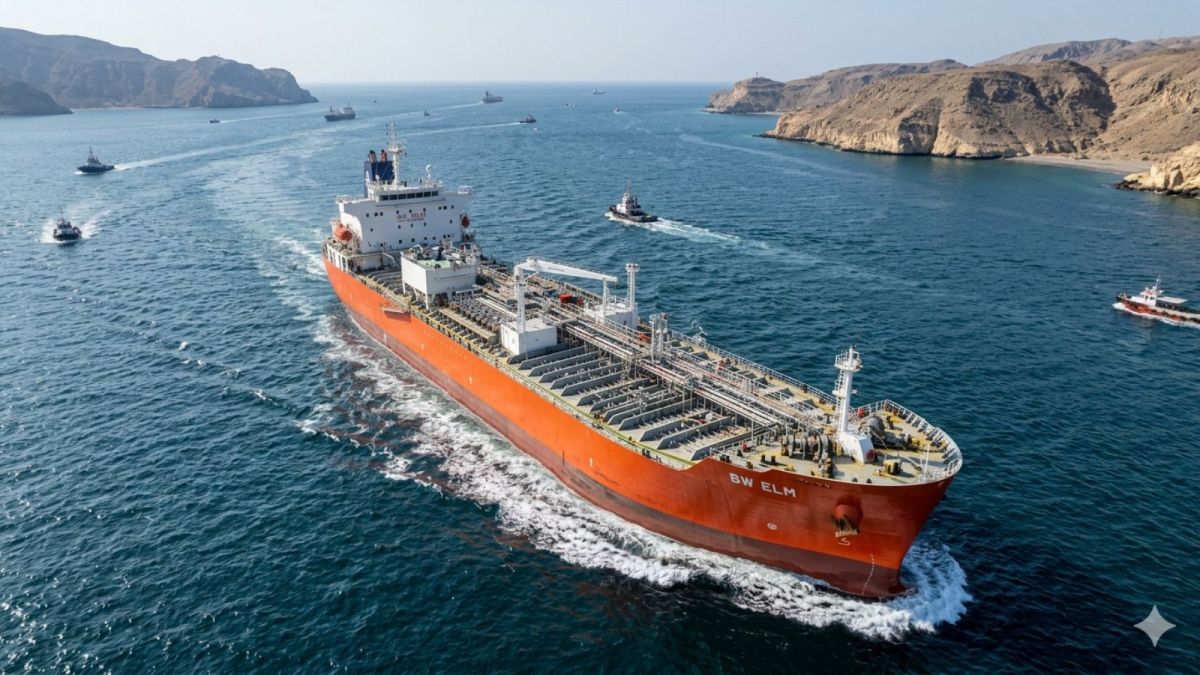
Iran’s Revolutionary Guards Corps (IRGC) claimed that two oil tankers passing through the Strait of Hormuz struck mines and exploded. The U.S. military disputed that account. The episode matters because the Strait of Hormuz is a major global energy chokepoint and a recurring flashpoint in West Asia.
What happened
The IRGC said the tankers had hit mines in the strait. The IRGC also warned sailors not to enter what it described as a minefield. The statement from Tehran points to continuing maritime tensions in one of the world's most sensitive sea lanes.
Why the Strait of Hormuz matters
The Strait of Hormuz links the Persian Gulf with the Gulf of Oman and the Arabian Sea. It is one of the most important passages for crude oil and liquefied natural gas shipments. Any allegation of mining, sabotage, or blockade in this route has immediate consequences for shipping insurance, naval alertness, and energy markets.
Related current affairs
- Iran strikes 2 tankers trying to pass Hormuz under U.S. ‘air escort’
- Explained: Hormuz altamp — constant attack & risk at Strait
- IRGC says two oil tankers explode after hitting mines in Hormuz
- Iran vows ‘eye for an eye’ as U.S. bombing continues
- Trump vows to hit a bridge or power plant in Iran for each Hormuz attack
- Allowing Iran to control Hormuz ‘dangerous precedent’, says Rubio