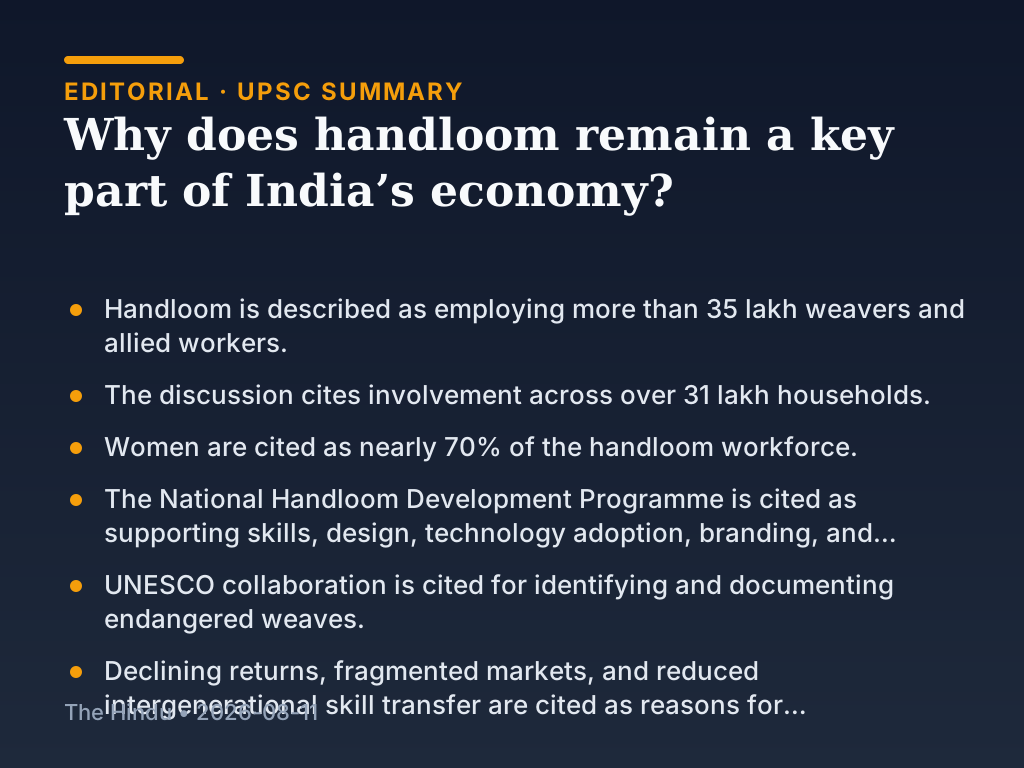
What happened: Handloom is positioned as a strategic economic sector
The discussion argues that India’s handloom should not be treated as a small artisanal activity. Handloom weaving is linked to economic resistance and national identity, with references to the Swadeshi movement and Mahatma Gandhi’s emphasis on the spinning wheel. The argument also states that, before Europe’s Industrial Revolution, Indian handlooms were among the leading industrial enterprises in manufacturing and trade, contributing to India’s role in global production and commerce.
Background and earlier position: Handloom’s workforce scale and rural non-farm role
The discussion presents handloom as a large rural non-farm employment ecosystem. It cites employment across over 31 lakh households and a workforce of more than 35 lakh weavers and allied workers. It highlights women’s participation as a defining feature, with women making up nearly 70% of the handloom workforce.
The discussion also states that handloom supports livelihoods through largely manual production and is therefore described as more labour-intensive than capital-intensive. It further states that handloom contributes a meaningful share of India’s cloth and carries centuries of craft knowledge through design vocabulary and cultural identity.
What changed now: Policy support is directed toward skills, design, branding, and market access
Related current affairs
- Insurance coverage for handloom weavers via PMJJBY and PMSBY under NHDP (Handloom Weavers’ Welfare)
- ITA calls for targeted invention to safeguard ‘troubled’ Darjeeling and Dooars tea industry
- Union Minister of Textiles inaugurates IIHT SUTRA 2026, first National Conclave of Indian Institutes of Handloom Technology
- National Handloom Designers' Conclave 2026 to showcase design-led innovation for India’s handloom sector
- Exceptional craft (letter to the editor)
- President graces 12th National Handloom Day; presents Sant Kabir Handloom Awards and National Handloom Awards 2025