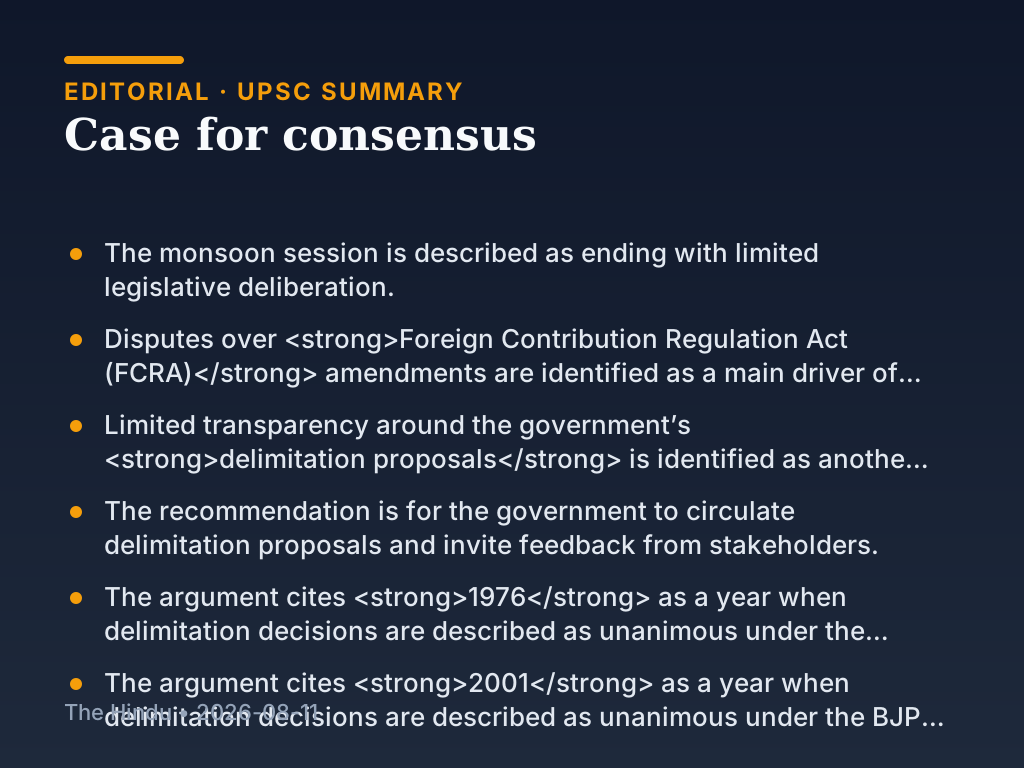
India’s monsoon session ended with limited legislative deliberation, driven by disputes over amendments to the Foreign Contribution Regulation Act (FCRA) and by concerns about insufficient transparency around the government’s delimitation proposals. The failure to build broad agreement is presented as a long-run risk to parliamentary democracy, especially when political actors prioritise vote arithmetic instead of good-faith discussion.
What happened in Parliament (as the argument describes it)
The monsoon session is described as concluding with little real legislative discussion. The argument identifies contention around Foreign Contribution Regulation Act (FCRA) amendments as a key reason for the stalemate, and it highlights limited public disclosure around the government’s delimitation proposals as another important driver.
Background and earlier consensus examples cited (1976 and 2001)
The argument claims that cross-party unanimity on delimitation has been possible in the past. It cites delimitation decisions reached unanimously in 1976 during the Congress government and in 2001 during the BJP government as examples of earlier consensus.