What happened: 2026 amendment reignites debate on Vande Mataram’s official stanzas
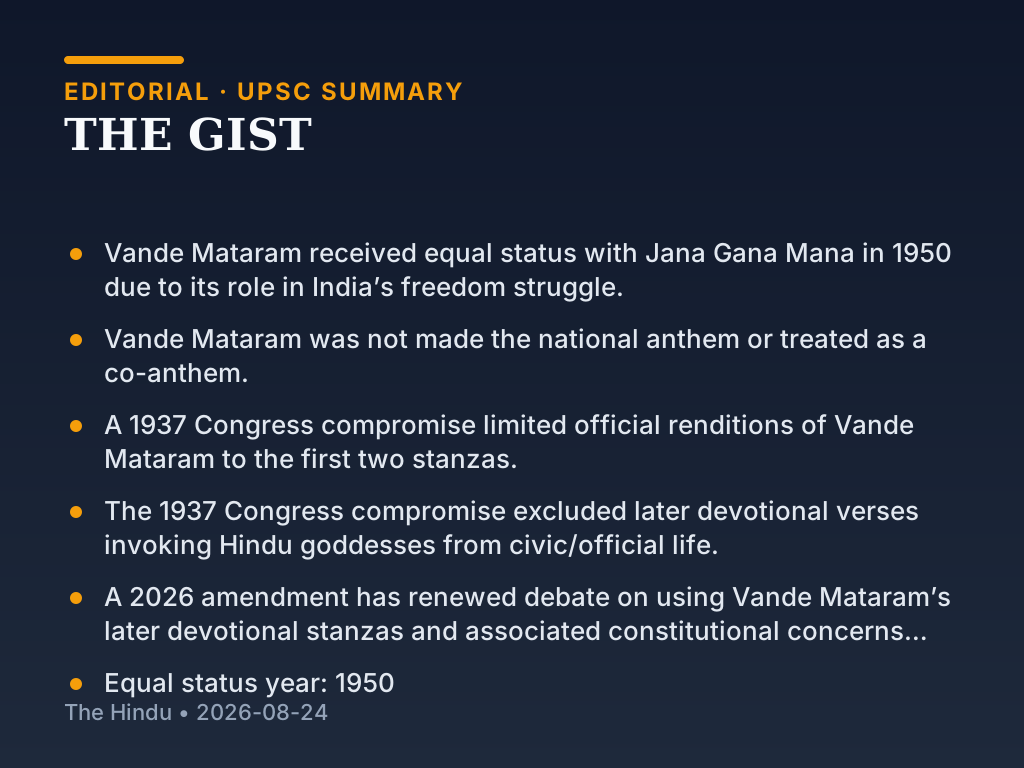
A 2026 amendment has renewed public and constitutional debate around Vande Mataram—specifically whether official civic use should include devotional later stanzas that invoke Hindu goddesses. The issue matters because national symbols are used in state-linked functions, schools, and public offices, where official choices can affect citizens’ religious freedom and freedom of conscience.
Background and earlier position: Equal status in 1950, but not “national anthem/co-anthem”
Vande Mataram received equal status with Jana Gana Mana in 1950 due to Vande Mataram’s role in India’s freedom struggle. Equal status, however, does not mean Vande Mataram became the national anthem or was treated as a co-anthem in the same way many people assume the term “national anthem” would work.
A key reason behind limited official usage is an earlier 1937 Congress compromise. Under that compromise, official renditions were kept limited to the first two stanzas of Vande Mataram. Later devotional verses that invoke Hindu goddesses were excluded from civic/official life.
What changed now: from “limited stanzas” to renewed pressure on later stanzas
Related current affairs
- Vande Mataram and the right to dissent
- BJP passes resolution against Cong. decision on Vande Mataram stanzas
- Letters to the Editor (Vande Mataram/Jana Gana Mana and anthem rendition principle)
- ‘A very serious issue’: Rajnath on Congress view on National Song
- Photo caption and quote placement for dissent-right argument
- Kerala CM warns against communalism, calls for democracy founded on open-mindedness